
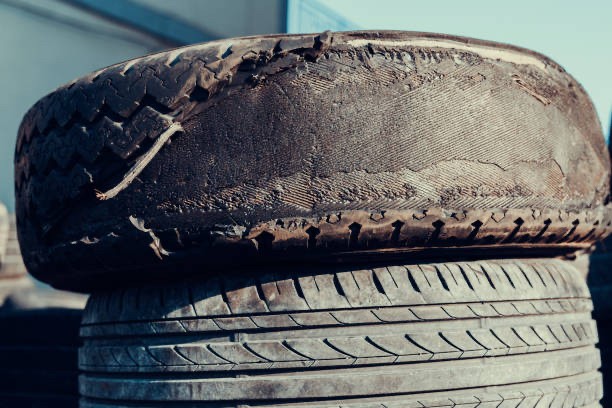
Weak oversight, overloaded depots, and stalled recycling infrastructure are turning waste tyre logistics into a growing public health, environmental and economic threat, according to the Recycling and Economic Development Initiative of South Africa (Redisa).
South Africa’s waste tyre management system is under mounting pressure, with governance failures transforming tyre depots into environmental and public health hazards rather than functioning nodes in a circular logistics chain.
Tyre recycling initiative Redisa says recent official site visits risk understating the scale of the crisis gripping waste tyre storage and transport networks nationwide.
The Rustenburg Waste Tyre Depot, recently visited by Forestry, Fisheries and the Environment Deputy Minister Bernice Swarts, does not reflect the reality faced by most depots across the country, Redisa cautions.
The organisation argues that a visit to the Biesiesvlei depot in Lichtenburg, also in the North West, would have provided a more accurate picture of the system’s breakdown. In 2023, the Lichtenburg site caught fire, resulting in extensive environmental damage.
Despite this warning sign, dangerously overburdened depots remain a persistent risk across all provinces. Redisa director Stacey Jansen warns that the accumulation of tyres has severe consequences beyond storage inefficiencies.
“Burning tyres causes severe air pollution,” she says.
The scale of congestion within the waste tyre logistics system is underscored by the Department of Forestry, Fisheries, and the Environment’s (DFFE) recent move to issue tenders for 32 additional waste tyre depots, covering a combined area of one-million square metres.
Rather than signalling progress, Redisa views this as evidence that tyres are being stockpiled instead of processed and recycled.
Logistical bottlenecks are also reflected in government spending patterns. The latest DFFE Annual Report shows underspending on transport budgets, a problem Redisa executive committee member Dr Chris Corzier attributes directly to the lack of available storage capacity.
At the same time, the department has gone to tender to auction off equipment valued at about R100-million, originally procured to pre-process tyres and generate revenue for the Waste Bureau but now sitting idle.
This, Corzier argues, amounts to an admission that the system is failing.
“Government is busy with waste tyre storage, not tyre recycling,” he says.
South Africa generates approximately 70 000 waste tyres every day yet reports received by Redisa indicate that depots are not consistently adhering to safety protocols. Trucks are increasingly turned away from overfull sites, disrupting transport flows and contributing to illegal dumping along roadsides and into riverbeds.
While producers continue to pay a levy earmarked exclusively for waste tyre management, Redisa says governance failures are undermining its purpose. More than half of the collected funds are reportedly diverted to activities unrelated to waste tyres, weakening the country’s ability to maintain a responsible collection, transport, and recycling programme.
The consequences are severe. Illegal burning releases carcinogenic pollutants linked to cancer and birth defects, while toxins seep into groundwater resources. Informal settlements and urban fringes bear the brunt of the crisis, where residents, often lacking alternatives, burn tyres for warmth, exposing communities to toxic fumes.
Redisa points to its own track record as proof that a functional waste tyre logistics system is achievable. Between 2013 and 2017, the nonprofit managed waste tyres nationally, established 22 tyre collection centres, created 226 small waste enterprises, and employed more than 3 000 people.
That system changed when waste tyre management was transferred to the Waste Management Bureau under the administration of former President Jacob Zuma, enabling the department to centralise contract allocation. According to Redisa, the shift has led to economic exclusion, with micro-collectors and small entrepreneurs, once critical to collection and transport networks largely shut out.
Former waste tyre collector Agnes Mbokwana believes policymakers need to see the impact firsthand.
She says the Deputy Minister should visit open fields and streets around Soweto, where tyres are dumped and burned, and speak to former collectors waiting for work. The failure to move tyres efficiently from collection points to depots, she adds, remains the system’s weakest link.
Beyond the environmental and health risks, Redisa says South Africa is missing a significant economic opportunity. Research indicates that implementing a functional waste management plan across just 13 waste streams could lift GDP growth by as much as 1.5 percentage points.
Without urgent governance reform and a shift from storage-focused responses to true recycling-driven logistics, waste tyre depots will continue to endanger communities while squandering jobs, investment, and growth potential.