
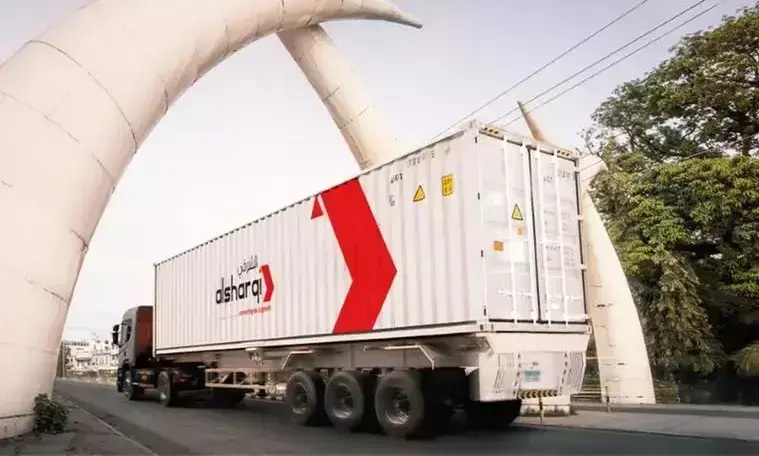
Nairobi and Kampala positioned as strategic gateways for regional and landlocked African markets
Al Sharqi Shipping has announced its expansion into Kenya and Uganda, establishing operations in Nairobi and Kampala as part of a strategy to strengthen logistics links between the UAE and East Africa.
The move is aimed at digitising and accelerating trade corridors connecting Gulf markets with high-growth economies across the African continent.
The company’s dual-country presence is structured around Nairobi serving as a gateway for cargo flows into East Africa, while Kampala functions as a transit hub for onward movement into landlocked markets.
This approach is intended to support trade into Rwanda, South Sudan and the Democratic Republic of the Congo through coordinated on-carriage logistics.
The expansion leverages the UAE–Kenya Comprehensive Economic Partnership Agreement to streamline cargo movement into Kenya, while inland distribution is managed through Uganda. This structure positions Nairobi as the primary entry point and Kampala as a consolidation and redistribution centre for regional trade.
Al Sharqi Shipping said it is investing in local infrastructure and operational capabilities to maintain control over the logistics chain.
These investments include special customs processes to manage regulatory requirements in both countries, dedicated trucking services for cross-border transport along the Mombasa–Nairobi–Kampala corridor, and real-time tracking of shipments from Dubai to their final inland destinations.
Speaking on the expansion, Kashif Rafiq, CEO of Al Sharqi Shipping, said, “This is not just an expansion; it is a commitment to the future of UAE-Africa trade.” He added, “While the UAE-Kenya CEPA provides the regulatory framework, the logistics reality requires boots on the ground across the border. By establishing a direct presence in both Nairobi and Kampala, we are securing the entire trade lane, ensuring reliability for importers in both key markets.”
Founded in 1989, Al Sharqi Shipping has grown from a local freight forwarding operation into a regional logistics provider. The East Africa expansion forms part of its broader strategy to build technology-led logistics networks across emerging markets and support cross-border trade flows.