
Ports, railways and industrialisation feature prominently as Beijing deepens Belt and Road ties across eastern and southern Africa.
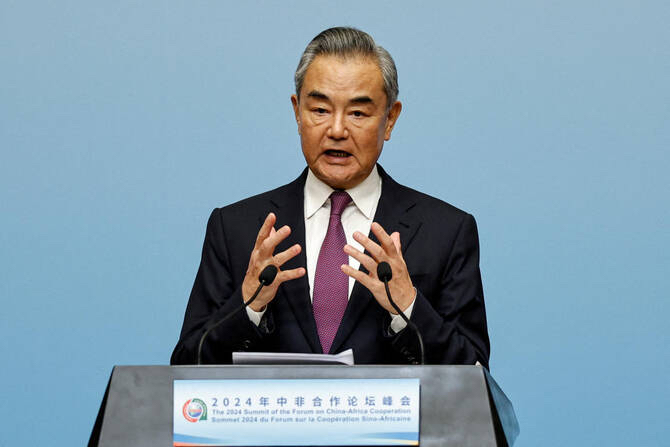
China has placed Africa’s most strategic trade corridors firmly in its diplomatic spotlight as Foreign Minister Wang Yi embarks on his annual New Year tour, underscoring Beijing’s growing focus on shipping routes, logistics hubs and resource supply chains across the continent.
The tour, which runs until 12 January, includes stops in Ethiopia, Somalia, Tanzania and Lesotho, countries that collectively represent fast-growing consumer markets, access to critical maritime routes, mineral transport corridors and emerging trade partners in southern Africa.
The visit comes as China seeks to consolidate its Belt and Road Initiative (BRI) partnerships at a time when global competition for African influence is intensifying and financing models are shifting away from debt-heavy infrastructure lending.
Ethiopia, Africa’s fastest-growing large economy, is expected to be a key highlight of the trip. With the International Monetary Fund forecasting economic growth of 7.2% this year, the country is increasingly viewed by Beijing as both a manufacturing base and a gateway to expanding export markets in East Africa.
“China is clearly signalling that future engagement will prioritise countries that combine scale, growth potential and logistical relevance,” said an Africa-based trade economist. “Ethiopia fits all three criteria.”
Beyond roads: reshaping investment priorities
While China remains the world’s largest bilateral lender, African governments are now pressing for investments that go beyond roads, ports and railways. With pandemic-era debt still weighing heavily on public finances, the emphasis is shifting toward industrial capacity, manufacturing and value addition.
Judith Mwai, a policy analyst at Development Reimagined, said the real test of China’s Africa strategy will be whether investment becomes more locally embedded.
“The real litmus test for 2026 isn’t just the arrival of Chinese capital, but the Africanisation of that investment,” said Mwai. “As Wang Yi visits hubs like Ethiopia and Tanzania, the focus must move from simply moving goods to actually making them.”
She added that African leaders should use the visit to push for projects that transform raw materials into finished products on the continent, rather than facilitating their export.
Somalia visit carries strategic weight
Wang’s stop in Somalia marks the first visit by a Chinese foreign minister since the 1980s and carries significant diplomatic and geopolitical weight. The visit follows Israel’s formal recognition of the breakaway Republic of Somaliland, a move that has heightened regional sensitivities.
Beijing has reiterated its support for Somalia’s territorial integrity and is expected to use the visit to reinforce its presence around the Gulf of Aden, a vital maritime chokepoint for global trade and Chinese shipments transiting the Suez Canal to Europe.
Tanzania anchors logistics ambitions
In Tanzania, China’s focus is squarely on logistics and mineral access. Chinese companies are currently refurbishing the Tazara Railway, which links Tanzanian ports to Zambia’s copper belt, a route Beijing views as strategically important for securing critical minerals.
The railway is also widely seen as a counterbalance to the US- and EU-backed Lobito Corridor, which connects Zambia to Atlantic ports via Angola and the Democratic Republic of Congo.
“Africa’s transport corridors are increasingly becoming arenas of strategic competition,” noted a regional infrastructure analyst. “Tanzania sits at the centre of that contest.”
Lesotho highlights free trade push
Wang Yi’s visit to Lesotho serves a different purpose: reinforcing China’s positioning as a champion of free trade. In 2025, Beijing granted tariff-free access to its $19 trillion economy for the world’s poorest nations, honouring a pledge made at the 2024 China–Africa Cooperation summit.
For Lesotho, which was among the hardest hit by US trade tariffs last year, the move offers a potential lifeline as it seeks to diversify export markets amid rising global trade tensions.