
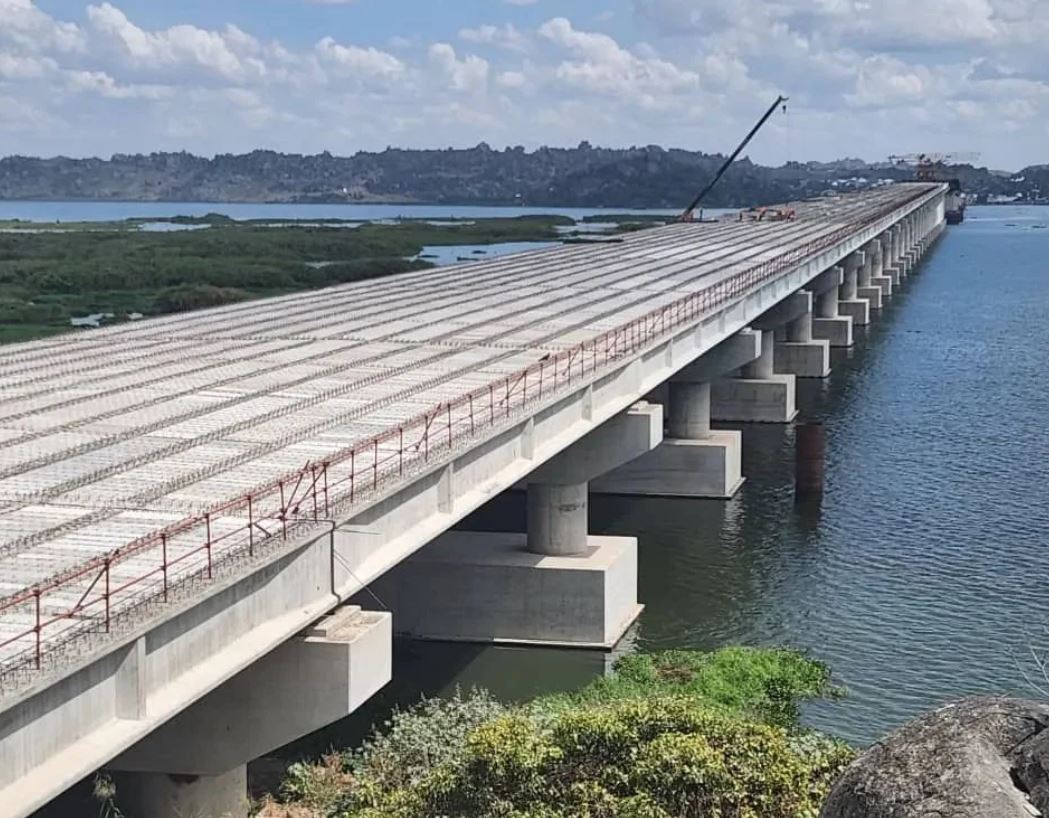
The Government of Tanzania has successfully completed the construction of the Magufuli Bridge, a major infrastructure project crossing Lake Victoria. Stretching three kilometres, the bridge now holds the record as the longest in Central and East Africa. It includes an additional 1.66 kilometres of access roads that connect the areas of Kigongo and Busisi.
This vital link forms part of the Trunk Road T4, a significant national transport corridor that enhances connectivity between Tanzania and neighboring countries such as Uganda, Rwanda, Burundi, and the Democratic Republic of Congo. By replacing slow and limited ferry services, the bridge drastically reduces travel time and increases reliability in cross-lake transportation.
Magufuli Bridge
According to Minister of Works Abdallah Ulega, the project is a powerful demonstration of Tanzania’s capacity to fund and execute large-scale infrastructure using internal resources. He emphasized that the bridge will make movement across the lake more efficient, reduce dependency on ferry services, and unlock economic prospects for communities within the Lake Zone. The bridge’s official launch is scheduled for June 19, 2025, as announced by Prime Minister Kassim Majaliwa, who encouraged citizens to gather in support of the inauguration, which will also be attended by the Head of State.
Beyond its transport utility, the Magufuli Bridge is a strategic investment in regional integration and local economic development. It is expected to stimulate trade, reduce transport costs, and foster growth across multiple sectors, especially in previously under-connected rural regions. Supporting roadworks such as the 54.5 km Sengerema–Nyehunge and the 32 km Kamanga–Sengerema roads further enhance the project’s overall impact, improving access to markets and services.
The entire project was funded by the Tanzanian government at a cost of approximately TZS 700 billion (around USD 270 million), without reliance on external financing. This independence underscores a national commitment to sustainable and self-reliant development. The bridge not only symbolizes engineering achievement but also represents Tanzania’s long-term vision for socio-economic transformation. With its completion, the country sets a strong precedent for regional infrastructure planning and national development driven by local expertise and funding.