
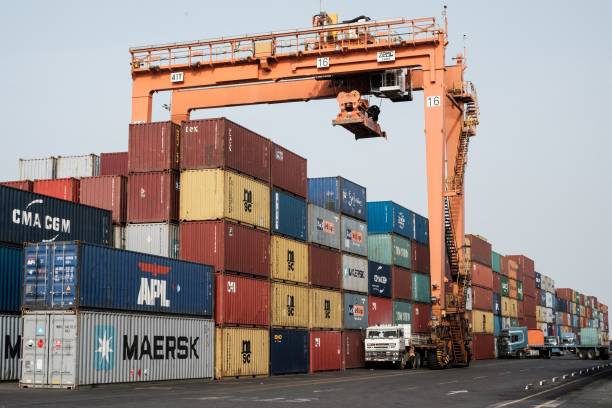
Egypt and Djibouti are stepping up economic cooperation with a strong emphasis on ports, maritime transport, and logistics services, as Egypt moves to deepen trade links and improve connectivity across Africa.
The discussions took place during high-level meetings in Djibouti between Kamel El-Wazir, Egypt’s Deputy Prime Minister for Industrial Development and Minister of Industry and Transport, and senior Djiboutian officials.
The talks highlighted the strategic importance of maritime and logistics infrastructure in supporting intra-African trade and regional integration.
Egypt views Djibouti as a key strategic partner in maritime transport, ports, and logistics services, it was said in a statement, noting that these sectors play a vital role in accelerating African integration and expanding trade corridors linking North, East and Southern Africa.
During the meetings, El-Wazir pointed to growing opportunities for Egyptian companies to expand their presence in the Djiboutian market. He said Egypt is well positioned to meet increasing demand in Djibouti for Egyptian products, including vegetables, fruits, processed foods, oils and other goods that rely on efficient shipping, port handling, and customs processes.
Cooperation on training and capacity building also featured prominently in the discussions. The two sides explored initiatives covering manual, craft, and technical skills, alongside the possibility of establishing a small Egyptian exhibition at the Djiboutian Chamber of Commerce to showcase Egyptian products and strengthen trade promotion and distribution links.
According to Egypt’s Ministry of Transport, El-Wazir met with Mohamed Ahmed Awaleh, Djibouti’s Minister of Agriculture, Water, Fisheries and Livestock, where discussions focused on cooperation in deep-sea fishing and aquaculture.
These areas are expected to drive demand for cold chain logistics, refrigerated transport and specialised export handling for seafood products.
Djibouti also expressed interest in leveraging Egyptian expertise in smart agriculture, modern irrigation systems, and agricultural greenhouses, as well as training programmes for youth and small project owners.
Such initiatives are expected to support local production, improve food security, and strengthen future agricultural supply chains.
Further talks with Djibouti’s Minister of Trade and Tourism, Mohamed Warsame Dirieh, highlighted steady growth in bilateral trade in recent years and underscored the need to further increase trade volumes.
Discussions also covered the role of Egyptian companies in supporting tourism services and training, which are closely linked to passenger transport and service logistics.
Meetings with Djibouti’s Minister of Economy, Finance and Industry, Elias Moussa Doualeh, focused on boosting mutual investments, upgrading trade volumes, and strengthening cooperation.
The talks welcomed the opening of Banque Misr Djibouti in November 2025 and the establishment of the Egyptian Djiboutian Business Council, both seen as important mechanisms to support trade financing and commercial coordination.
The Djiboutian side also showed interest in visiting Egyptian factories producing medicines and medical supplies to explore import opportunities, citing Egypt’s strong manufacturing base and competitive pricing. These trade flows would depend on reliable shipping routes, efficient ports and streamlined customs procedures between the two countries.
The meetings were attended by Egypt’s ambassador to Djibouti, Abdel Rahman Raafat, and Assistant Minister for Maritime Transport Mohamed Fathy, underscoring the central role of transport and logistics in advancing bilateral economic cooperation.