
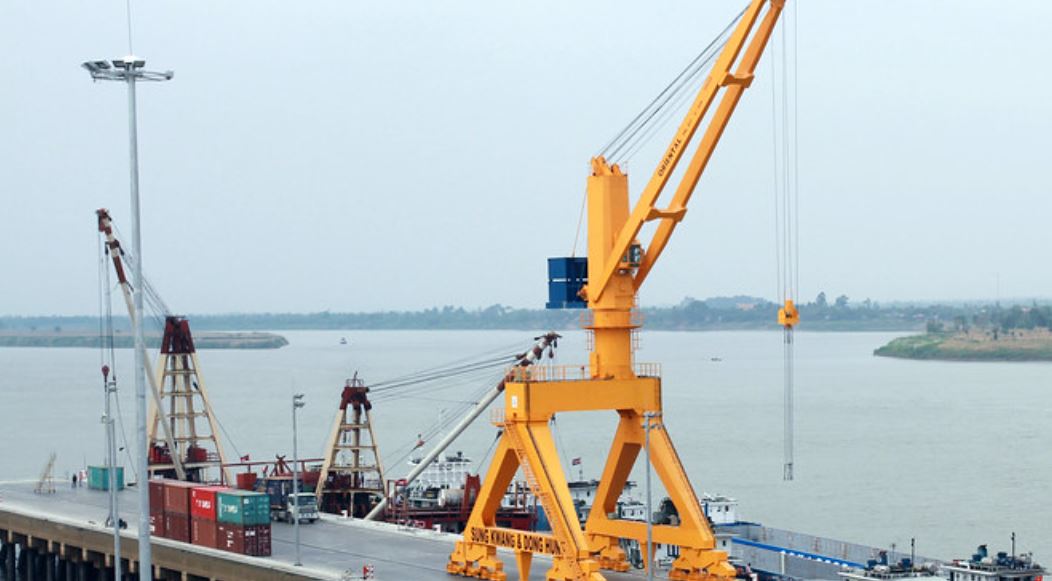
Egypt has finalized a series of long-term agreements with UAE-based companies; Abu Dhabi Ports Group and DP World that hand over operational control of several key ports and logistics hubs in exchange for substantial investment.
These deals grant Emirati entities long-term rights to develop and manage Egypt’s maritime infrastructure. For instance, AD Ports has secured a 50-year lease to build and operate new shipping and cruise terminals at East Port Said, located near the northern end of the Suez Canal. This follows earlier agreements including a 30-year deal for a multipurpose port at Safaga, and 15-year agreements for cement terminals in West Port Said and El Arish. Additional projects are underway at Hurghada, Sharm El Sheikh, and the Port of Alexandria.
DP World, a Dubai-owned logistics giant, has also expanded its presence in Egypt. In 2022, the company committed to developing a logistics zone at Sokhna port, just southwest of the Suez Canal. This includes a new basin and jetty with facilities for bulk liquids, warehousing, and a sugar refinery. A livestock facility is also planned, with operations linked to a nearby industrial zone. A new memorandum of understanding signed in late 2024 outlines the development of a free trade zone in Egypt’s New Administrative Capital. These projects signal a deepening of Emirati involvement in Egypt’s logistics sector, aligning with the UAE’s long-term trade and geopolitical ambitions.
The UAE’s growing influence over maritime routes through Egyptian ports aligns with its strategic objective to dominate key trade corridors stretching from the Arabian Gulf to the Mediterranean. Through investments and military alliances along the Red Sea—on islands such as Socotra and Perim, and in places like Asmara—the UAE is securing its access to vital shipping lanes. These investments are not solely for national security but also serve a commercial purpose. With DP World handling a significant share of global container traffic, the UAE aims to consolidate its role as a global logistics powerhouse.
Egypt’s economic trade-offs
From Egypt’s perspective, these partnerships offer a practical solution to its pressing financial challenges. Instead of accumulating more sovereign debt, the country secures upfront capital investments to develop infrastructure that it will eventually regain control over. Despite criticism of its economic management particularly in relation to military-dominated projects and large-scale developments like the New Administrative Capital Egypt views these deals as strategic lifelines. They provide a flow of foreign investment without inflating the external debt burden.
Egypt’s immediate financial challenge is the sharp drop in revenue from the Suez Canal due to disruptions caused by Houthi attacks on Red Sea shipping. Annual canal earnings have plummeted from $9.4 billion in 2022–23 to a projected $1.8 billion in 2024–25. This downturn undermines the return on Egypt’s $8 billion investment in the canal’s expansion since 2014. Even with a debt-to-GDP ratio reduced to 91% in 2024, the country remains one of the largest borrowers from the International Monetary Fund, second only to Argentina. In this context, agreements with UAE firms provide both critical short-term relief and a long-term development path.