
When people think about commodities, they often picture glittering gold or barrels of oil. But the real backbone of modern industry is less glamorous: copper, aluminium, zinc, lead, and cobalt. These “base metals” run through everything we use, from the power lines above our streets, to the batteries in our cars, to the steel beams holding up our cities. And behind the scenes, one South African company has quietly built itself into a critical player in keeping those metals moving: Metalline Africa.
This specific institution has been operating as a dominant force for many years, and serves as a brilliant case study for investors looking to position themselves in Africa, and South Africa, as the prime international metal commodity hub. The organization has further avoided the limelight while making significant investments, major changes to the industry itself, and but little noise. Metalline has since reached a degree of maturity by comparison to known major brands and has positioned itself as a mission-critical trade partner.
Scale of the Global Metals Economy
The global metals and minerals market was valued at more than $10 trillion in 2023, according to World Bank and UN trade data, with base metals such as copper, aluminium, zinc, and lead forming the backbone of industrial and energy transition supply chains.
Copper alone accounted for over 22 million tonnes of refined consumption in 2024, driven by power infrastructure, renewable energy projects, and electric vehicle production. Aluminium demand surpassed 70 million tonnes in 2024, reflecting its role in automotive, packaging, and construction sectors.
These are not abstract figures for commodity traders in London, Geneva, Singapore, Dubai, or Houston. They represent ships arriving late, warehouses filling up, and contracts that hinge on smooth transport. And right now, the supply chain is straining. Warehousing capacity is tightening across Southern Africa, and the question everyone is asking is: who can handle the volumes?
Challenges in African Ports and Logistical Capacity of the Commodity Industries
The logistics challenge in Mid-Africa is so severe that copper leaves the DRC for export via Durban instead of closer ports like Dar Es Salaam and Maputo which renders the export more cost effective. But this is the only alternative option. The demand for specialized handling currently exceeds the local port capacity in Africa, and the availability of specialized institutional knowledge in the commodity logistics industry. This opens up a new world for commodity traders and sophisticated investors to invest in the port development of Africa, and the railway infrastructures surrounding it.
While there are over 3,000 transport companies in South Africa, the warehousing industry is significantly smaller and the commodity logistics sector calls for far deeper fields of specialization such as the wrapping of broken steel bands around copper cathodes, the bagging of lithium, the storage of high grade chrome and ferrochrome, etc. The concept of a turnkey supply chain solution remains one of the most valuable solutions as a break at any point in the supply chain can cause catastrophic losses. Metalline provides such a solution.
Commodity specific warehouses such as those in Metalline’s extensive asset portfolio are hard to find and, historically, do not exist in abundance in South Africa. While the metals industry is a major contributor to the local economy, there are less than twenty specialized handlers in this area.
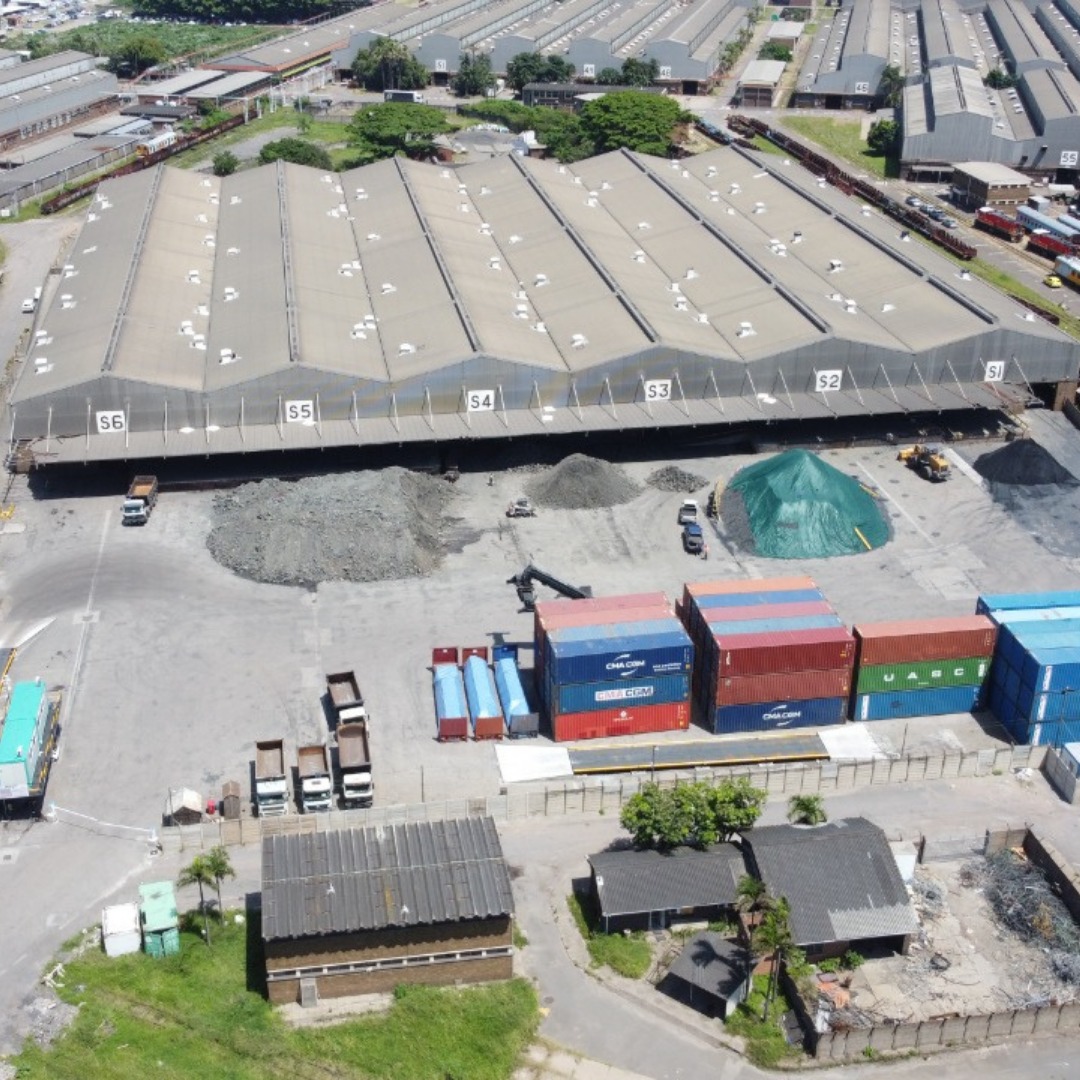
The global metals industry is entering a period of constrained logistics capacity as demand for base and battery metals accelerates and the African continent remains positioned as the world’s largest supplier of these metals. At the heart of this shift is Metalline, which is adapting its systems to handle unprecedented cargo flows across Sub-Saharan Africa. With its Durban Port operations, Metalline serves as a known and timeless anchor of the local trade routes that connect Africa’s mining giants to commodity trading hubs in London, Geneva, and Singapore.
The company’s Krugersdorp hub illustrates the scale and sophistication of its operations. Designed to manage up to 800 truck movements a day and to store as much as 180,000 tonnes of bulk ore, the facility integrates cargo management, smart-trucking systems, and 24-hour security. These measures guarantee that chrome, ferrochrome, and allied commodities are stored safely before export, while also ensuring rapid turnaround and traceability across the supply chain.
With more transporters like Metallline turning their focus to the commodity industries, the problem of warehousing and bulk handling in Africa may very well be resolved by 2032.
Risk & Reward Ratio for Investors in the African Logistics Sector
Investors have long been reluctant to invest in Africa under the framing of corruption, bribery, and theft. These grave allegations have kept capital flowing in upper Europe and throughout the Americas, while prejudicing, and subsequently depriving willing and able businessmen and women in Africa from equal opportunity. These old narratives are systematically becoming outdated as some of the largest companies in the world are investing precisely in the same linear direction as Metalline, betting big on the continent’s port facilities, transport corridors, and warehousing infrastructure.
Global port operator DP World has been steadily expanding across Africa, taking stakes in key terminals from Dakar to Maputo. South African logistics giant Grindrod has poured resources into bulk terminals and transport infrastructure, recognizing that the real growth frontier lies in connecting Africa’s mineral heartlands to international trade hubs.
Metalline fits squarely into this new wave of investment. By expanding its warehousing footprint in Durban and building out capacity in Maputo and Walvis Bay, it is moving in parallel with these global heavyweights and ancient giants that have existed for centuries and decades. The investments by these prestigious handlers, not gradually, but comprehensively discredits claims of poor capabilities and re-establishes the authority, potential and reputation of Africa.
South Africa has set many records in the metals and PGMs industry, and has been recognized as a forward thinking collective, being one of the first to welcome non-sexism and female rights, overcoming apartheid, holding the eighth wonder of the world (Table Mountain in Cape Town) and attracting millions of tourists every year. While the state is recovering from infrastructural challenges, the country remains the largest economy in Africa, competing with Egypt and Nigeria in exports, and stands positioned to hold first place in continental exports for the next 10 years.
The emphasis of metals and mining in agrarian-mining dominant Africa, and the celebrated mineral deposits of the continent leaves it with ample opportunity to become the world’s largest commodity exporter, and remains the largest attraction of foreign direct investment into the continent’s mineral and metals sectors, and supporting industries.
For investors, the signal is clear: the old excuses no longer hold. Africa is not a place to avoid, it is a place to compete for first-mover advantage in the metals and minerals supply chain that underpins the global economy.
Metalline at the International Commodity Summit 2025
With transport systems tightening under the weight of soaring metals demand, Metalline’s innovations and regional dominance position it as a vital player in sustaining Africa’s contribution to global industry. As the company prepares to present at the International Commodity Summit 2025 in November, it stands at the forefront of a sector that is reshaping global trade flows and rewriting the rules of commodity logistics.
The International Commodity Summit reinforces the country’s commitment to becoming a global commodity leader and is backed by the National Marketing Agency of South Africa under Cyril Ramaphosa’s administration (Brand South Africa, whom is also hosting the G20). The country and its leadership remains heavily invested into the rebranding of South Africa as “The Country of Origin” and has no plan to reduce mineral export volumes.
Metalline’s storage facilities, spread across bonded and freestore warehouses, currently manage the most predominant commodities of the country, and stands as a senior contributor to the facilitation of movement in the local commodity industry and reserves its position as a prime example of the possibilities surrounding these industries.
Metalline’s Growth in the SADC Region as a Seasoned Transporter
Metalline’s footprint extends beyond South Africa, with active port presences in Maputo (Mozambique) and Walvis Bay (Namibia), both critical nodes in the Southern African Development Community (SADC) trade corridor. This expansion is a key factor to note, in respect of the diplomatic fraternity and shared destiny that ties together the Southern parts of the African region. Combined, these hubs are expected to carry a rising share of Africa’s $400 billion annual mineral exports, and while governments are working hard to improve upon existing trade agreements, companies like Metalline are strengthening the arteries of the Southern African Development Community (SADC) trade corridor – one of the most significant commercial pathways on the continent.
These two locations are not incidental choices. Maputo has long served as a vital outlet for South African and regional exports, linking the mineral-rich provinces of Mpumalanga and Limpopo directly to the Indian Ocean. Its deep-water port is increasingly central for coal, chrome, and ferrochrome shipments, offering an alternative to Durban at a time when congestion and capacity constraints threaten supply chains. By consolidating its presence there, Metalline is helping miners and traders move cargo faster, more securely, and at lower cost, while cementing Mozambique’s place as a natural partner in the export of Southern Africa’s resources.
On the Atlantic side, Walvis Bay provides another strategic anchor. Namibia’s principal port has become a gateway for commodities destined for European and American markets, offering direct shipping routes to the west while bypassing the Suez Canal and Red Sea chokepoints. Metalline’s investments in Walvis Bay highlight the company’s forward-looking approach: integrating logistics systems that bridge the mineral belts of Southern Africa with global buyers in Geneva, London, Rotterdam, and Houston.
Together, Durban, Maputo, and Walvis Bay form a triangular hub of resilience – one that speaks of the potentialities contained in the heart of the economic bonds between the region’s nations.