
Strategic N3 corridor investment expected to ease congestion between Durban and Johannesburg
The small town of Mooi River in the KwaZulu-Natal Midlands could soon emerge as a major logistics hub as plans advance for a multibillion-rand dry port aimed at easing truck congestion along the busy N3 highway freight corridor.
The proposed logistics hub is expected to attract an estimated R4-billion investment and forms part of several major development projects earmarked for the area to revitalise the local economy.
The dry port will allow trucks transporting containers between Durban and Johannesburg to offload cargo onto trains in Mooi River, which will then transport the containers to their final destination. The same process will apply in reverse for containers arriving from Durban.
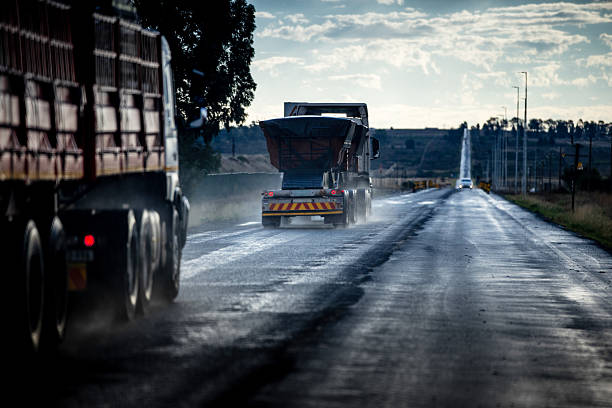
Municipal officials say the project is designed to reduce road congestion, improve logistics efficiency and lower the number of truck accidents along one of the country’s busiest freight routes.
James Martin, a manager at the Umgungundlovu District Municipality Economic Development Agency, said the investment could transform the town and stimulate economic activity in the region.
He estimates that overall investment in the area could reach about R4.5-billion, with roughly R4-billion allocated to the proposed dry port.
Martin noted that Mooi River’s strategic position along the N3 corridor makes it an ideal location for logistics expansion, particularly as industrial development along the route closer to Durban continues to fill up.
“We identified Mooi River as a key development strategic node, especially given that the N3 corridor from Durban, Hammarsdale, Mkhambathini and Pietermaritzburg is filling up and there is no more industrial space for development,” he said.
He added that a developer has already identified a site for the project and is moving ahead with the necessary regulatory processes.
“The environmental impact assessment and water licences are currently underway, and substantial funding has been secured for an investment in a dry port in the Mooi River area. The net investment into the Mooi River area for the dry port is estimated to be R4-billion.”
Additional developments are also planned for the town. About R500-million is expected to be invested in converting a former Taiwanese textile factory into a new industrial park.
The factory, which closed nearly three years ago, occupies about five hectares. The Taiwanese owners are reportedly consulting their head office on whether to lease the property or partner with investors in the development of the industrial hub.
Themba Mkhasibe, manager of Local Economic Development at the Mpofana Local Municipality, said the projects aim to restore Mooi River’s economic role and create new opportunities for residents.
“These projects will restore the area to its original purpose, as the town was established years ago as an industrial hub,” he said.
Mkhasibe emphasised that the logistics hub could play a key role in reducing accidents on the N3 by shifting more freight transport from road to rail.
“Given the number of truck accidents along the N3, this hub will be central in decreasing truck congestion on the N3, thereby reducing accidents by ensuring that goods are transported by train.”
He added that the broader development programme would help revive the town’s economy, which currently has limited industrial activity.
“Mooi River is located on the N3, in the centre of all big cities; it is an ideal place for such investments,” Mkhasibe said.
The Road Freight Association declined to comment on the proposed dry port project, saying it was not aware of the initiative.
Mkhasibe said local authorities will work closely with key stakeholders to ensure the infrastructure needed for the hub is in place, including engaging with Transnet to ensure the rail network can support the logistics operations.
“We will also engage with the Department of Transport to ensure that all our roads are in good condition to handle the expected traffic,” he said.