
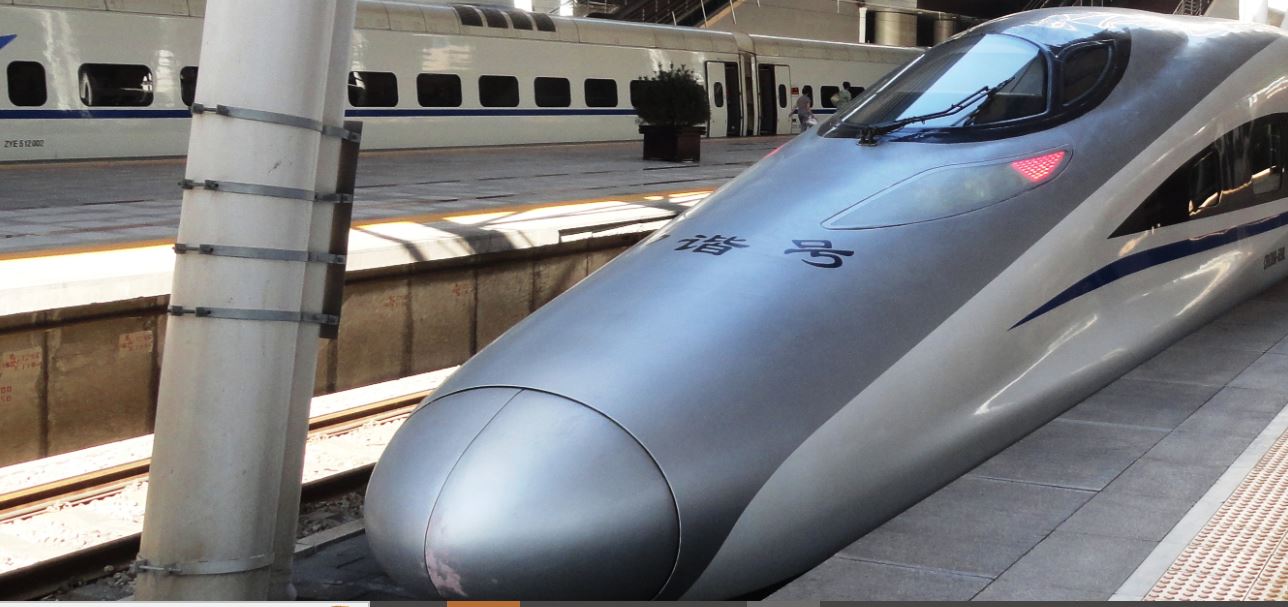
Nigeria has unveiled plans to proceed with the development of an ambitious 4,000-kilometre high-speed rail network designed to link major economic corridors, boost trade, and foster stronger national integration.
The announcement followed a high-level meeting in Abuja between the Secretary to the Government of the Federation (SGF), Senator George Akume, and executives of De-Sadel Nigeria Limited, alongside their financial partners, China Liancai Petroleum Investment Holdings Limited. At the meeting, investors formally presented a $60 billion proof-of-funds package to support the landmark project.
Modern transportation solutions
Senator Akume described the discussions as “highly encouraging,” noting that the funds would now undergo standard government verification and due diligence before further steps could be taken. Transport Minister, Senator Sa’idu Alkali, stressed that the initiative aligns with the ministry’s mission to deliver safe, efficient, affordable, and modern transportation solutions. He added that the rail project supports President Bola Tinubu’s agenda of attracting foreign capital into key infrastructure sectors critical to long-term economic growth.
In addition, Minister of State for Petroleum Resources (Gas), Ekperikpe Ekpo, reassured stakeholders that Nigeria’s abundant natural gas reserves estimated at 210 trillion cubic feet onshore and an additional 600 trillion cubic feet offshore would provide sufficient supply to power the project.
De-Sadel Nigeria Limited’s Chief Executive Officer, Samuel Uko, revealed that construction would be executed in stages. The first phase, covering roughly 1,700 kilometres, will connect Lagos, Abuja, Kano, and Port Harcourt. He added that completed sections would be opened for public use even before the planned 36-month completion timeline.
Director-General of the Infrastructure Concession Regulatory Commission (ICRC), Jobson Ewalefoh, explained that submission of proof-of-funds is a legal prerequisite for projects of this scale. He assured prospective investors that the ICRC would conduct a rigorous evaluation of both the financial backing and the technical feasibility to safeguard Nigeria’s infrastructure interests.