
Infrastructure advisory company Osmotic Engineering Group (OEG) has marked 2025 as a defining year of growth, influence and international expansion, following its role in one of South Africa’s most significant national energy studies, the delivery of large-scale African water infrastructure projects, and the strengthening of its position as a specialist infrastructure advisory firm.
At the centre of the year was OEG’s collaboration with PwC South Africa on the landmark national study, ‘South Africa’s Energy Sector Investment Requirements to Achieve Energy Security and Net Zero by 2050’. Commissioned through a partnership with the Development Bank of Southern Africa (DBSA), the Presidential Climate Commission (PCC), the National Planning Commission (NPC) and National Treasury through the SA-TIED Programme, the study has laid out a long-term investment and infrastructure roadmap for South Africa’s electricity sector. It was further strengthened by technical and expert inputs from SANEDI, Eskom Holdings SOC Ltd. and the University of Cape Town.
Andrew Johnson, Energy Director at OEG, says the project represented a major national contribution. “This was effectively a new generation of long-term energy modelling for South Africa. We developed detailed energy system models using open-source software that tested multiple future pathways to 2050, balancing energy security with emissions reduction. Our role was to build and validate the technical foundation that quantified generation, transmission and distribution investment needs. It was a complex, multi-year process, but one that has real value for long-term planning and infrastructure funding.”
The collaboration with PwC has extended beyond national modelling. In 2025, OEG and PwC were appointed by Eskom to support the establishment of Eskom Green, a new ring-fenced renewable energy business designed to accelerate the utility’s participation in South Africa’s clean energy transition. The work includes strategic and technical advisory on project pipelines, risk management, operational structuring and market positioning.
Johnson adds: “With Eskom Green, we are helping shape what a modern, competitive renewable energy business looks like inside a public utility. The focus is on making projects bankable, understanding risks early, and aligning technical delivery with commercial and market realities. This builds directly on the national level work we have done through the PwC partnership.”
OEG’s energy advisory credentials were further strengthened through its ongoing role as technical advisor to Discovery Green, one of South Africa’s leading private energy traders. During 2025, key milestones were achieved on large-scale wind and solar projects, including financial close on major utility-scale developments in the Western Cape and Limpopo.
Johnson says: “Our work with modelling the national electricity system allows us to apply the same modelling and advisory tools to major private energy offtakers. We help clients understand how to decarbonise at the lowest system cost, where to invest and how to structure projects so they can reach financial close.”
Beyond energy, OEG’s water infrastructure portfolio expanded significantly in 2025. In Cameroon, the company was appointed as owner’s engineer on what is now one of that country’s most ambitious water infrastructure developments. Located in Douala, the ultrafiltration water treatment project is aligned with the directives of President Paul Biya and Cameroon’s Five-Year Priority Investment Programme for 2023-2027, as well as the country’s Strategic Development Plan for 2026-2030.
The project will expand plant capacity from 55 megalitres per day to 123 megalitres per day, supporting the national objective of achieving 85% urban and peri-urban drinking water coverage by 2032. Funded by international development finance institutions, the project has positioned OEG firmly on the continental infrastructure stage.
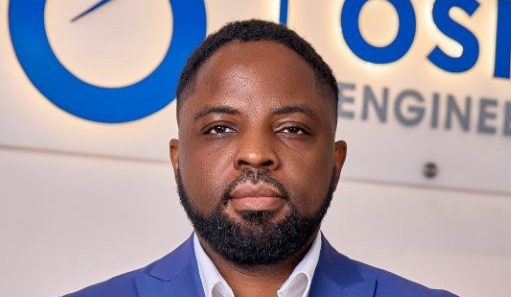
Dr. Tony Igboamalu, CEO of OEG, says the project reflects the company’s long-term vision. “This project in Cameroon is not just about a treatment plant; it is about resilience, dignity and long-term national development. We are honoured to serve as owner’s engineer on a presidentially mandated programme that will fundamentally change access to potable water for thousands of people. It reflects the kind of high-impact, advisory-led infrastructure work that defines OEG.”
OEG also supported South African water sector innovation in 2025 through its involvement in the launch of the Emfuleni Special Purpose Vehicle (SPV) for water and sanitation infrastructure, alongside Rand Water, government stakeholders and private sector partners. The SPV is designed to unlock long-term financing for high-impact water and sanitation projects through structured public–private partnerships.
Dr. Igboamalu comments: “The creation of the Emfuleni SPV represents a shift in how we finance and deliver water infrastructure in South Africa. At OEG, we believe that strong technical advisory combined with innovative funding mechanisms is the only way to close the infrastructure gap.”
Further strengthening its water and sanitation leadership, OEG secured official approval in Lesotho for the implementation of Biopipe as a decentralised wastewater management system. The technology is designed to deliver zero-sludge, odourless wastewater treatment for urban, rural and off-grid communities, supporting scalable and climate-resilient sanitation.
“OEG is deeply committed to decentralised, smart and resilient water systems for Africa,” highlights Dr. Igboamalu. “Technologies such as Biopipe and advanced filtration enable us to deliver sustainable sanitation solutions that are affordable, scalable and fit for the realities of African cities.”
At a national level, OEG was appointed in 2025 to the Department of Water and Sanitation’s strategic advisory panel, supporting long-term infrastructure planning. The company also advanced projects with Dipula, advising on water efficiency strategies across a national property portfolio, and supported infrastructure planning in Buffalo City Metropolitan Municipality and Amathole District Municipality through advisory work linked to institutional funding and public–private partnership readiness.
The group has also expanded its telecommunications capability into a broader information and communications technology (ICT) offering, reflecting the growing importance of data, digital infrastructure and intelligent systems in large infrastructure programmes.
Geographically, OEG made strategic advances through the formal establishment of OEG Lesotho, targeting major cross-border infrastructure opportunities, and the registration of an OEG entity in the United States as part of a long-term global growth strategy. Looking ahead, OEG has positioned 2026 as a year of consolidation and international growth, with a sharpened focus on advisory-led delivery.
“Our strategy is clear,” says Dr. Igboamalu. “We are building OEG into a global infrastructure advisory business. We are moving deliberately beyond traditional design engineering into high-value, strategic advisory, owner’s engineering and project anchoring. We bring together technical, financial, legal and environmental expertise to make projects bankable, fundable and sustainable. That is how infrastructure should be built.”
As South Africa and the wider African continent confront increasing energy demand, climate pressures and water scarcity, OEG believes the role of integrated, technically led advisory firms will become ever more critical. “With collaboration, innovation and purpose, we are helping shape infrastructure that lasts,” concludes Dr. Igboamalu.