
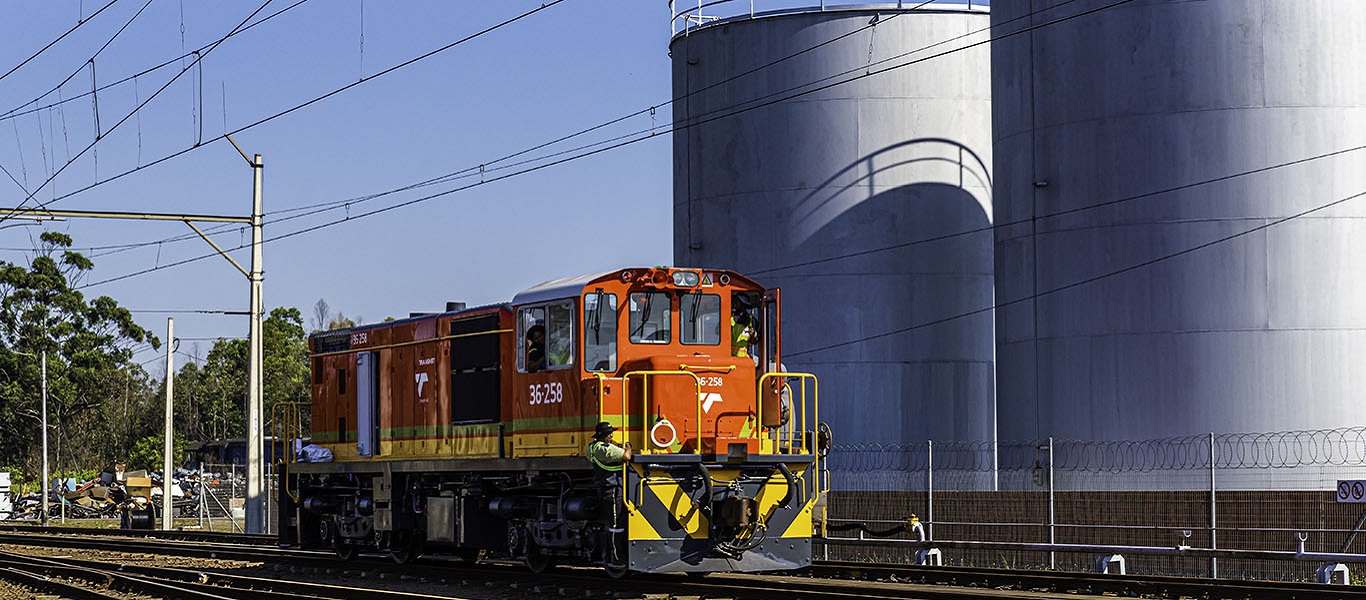
Deputy President Paul Mashatile outlines government plans to modernise rail, improve freight and passenger services
South Africa is accelerating efforts to restore and modernise its rail transport system, with government committing significant resources and structural reforms to strengthen economic infrastructure and stimulate growth.
Deputy President Paul Mashatile made the remarks on Thursday while responding to questions in the National Council of Provinces in Cape Town, addressing concerns about the decline and recovery of the national rail network.
“We have prioritised stronger intergovernmental coordination, improved planning and more effective execution across the spheres of government to restore the performance of critical economic infrastructure, including rail,” he said.
Mashatile highlighted the government’s engagement with multiple departments, including Public Works and Infrastructure, Transport, Water and Sanitation, and Cooperative Governance and Traditional Affairs, to ensure the upgrading and protection of strategic infrastructure that supports economic activity and job creation.
Significant budget allocations are backing these efforts. Finance Minister Enoch Godongwana has allocated R21.9 billion through the budget facility for infrastructure, targeting major projects such as upgrades to Transnet’s coal and iron ore corridors to restore rail capacity.
The Passenger Rail Agency of South Africa (PRASA) is also a key focus, implementing its corridor recovery programme and modernising passenger services. By the end of 2025, PRASA had commissioned 35 of its 40 passenger corridors and achieved an audited 77 million passenger journeys on long-distance rail services.
Plans for 2026/27 include reintroducing routes such as Johannesburg–Durban, Johannesburg–Queenstown, East London–Johannesburg, Cape Town–Johannesburg, Johannesburg–Musina, and Cape Town–Queenstown, subject to funding and locomotive readiness.
In addition to passenger services, PRASA is rolling out thousands of kilometres of fibre optic infrastructure for a new signalling system, partnering with the private sector to improve safety and real-time communication across the rail network.
Transnet’s rail infrastructure management is prioritising the revival of critical rail lines that support agriculture, mining, manufacturing hubs, and rural trading towns. “This work includes the revival of critical rail services that support agriculture, mining, manufacturing hubs and rural trading towns that rely heavily on rail connectivity,” Mashatile said.
Through Operation Vulindlela, government is fast-tracking structural reforms to modernise the rail and logistics sector, including opening the network to third-party operators to improve efficiency and competition. Eleven major freight companies have already been enlisted to begin work on these corridors.
Mashatile expressed confidence in the combined efforts of government investment, policy reforms, and private sector participation to restore South Africa’s rail system. “I am confident that with the plans government has put in place, additional resources and private sector involvement, we will begin to correct this situation and ensure that rail infrastructure once again contributes to economic growth and job creation,” he said.
Over the next three years, the government plans to invest R500 billion in infrastructure, with R120 billion earmarked for transport projects, including rail rehabilitation, port efficiency upgrades, and road network maintenance.