
Government moves to lock in long-term rail reforms and accelerate private sector participation
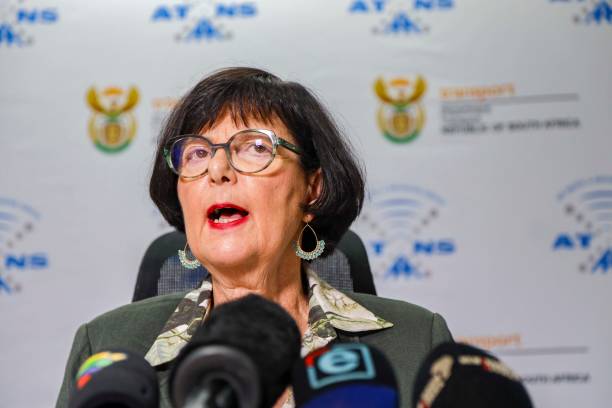
South Africa’s rail sector is entering a transformative phase, with Transport Minister Barbara Creecy confirming plans to introduce a new National Rail Bill aimed at securing long-term reforms and expanding private sector participation.
Creecy reports that she intends seeking Cabinet approval for the Bill during the 2026/27 financial year. The legislation is expected to embed ongoing reforms into law, ensuring continuity and stability in the country’s rail policy landscape.
Once approved by Cabinet, the Bill will be released for public consultation before undergoing the full Parliamentary process required for legislative approval. According to Creecy, the move is essential to eliminate uncertainty around the sustainability of current reforms, particularly in the event of future political changes.
“One of the questions that is very important in any rail reform process, or indeed in any reform process, is: how are we embedding the changes that we see now for the long term, and how certain can you be that, if there is a change of government, you would not be finding that this policy changes?”
“That is why we’re in the process of developing The National Rail Bill, so that we will have a law to express the imperatives and the priorities of the National Rail Policy,” Creecy told industry stakeholders on March 26.
“Our intention is to take this Bill to Cabinet during the financial year, and once Cabinet has approved, we will then Gazette the Bill for formal public consultation.”
Currently, reforms are being guided by the National Rail Policy, which is actively opening the country’s mainline network to private train operating companies. This marks a significant shift from a historically state-dominated system toward a more competitive, multi-operator environment.
The Transnet Rail Infrastructure Manager, which has been separated from Transnet Freight Rail, has already identified 11 train operating companies eligible to operate across 41 slots on six key corridors. The first operators are expected to begin services in April 2027.
If all identified operators reach financial close, they could collectively contribute an additional 20 million tons of freight capacity to the network, an important step toward revitalising rail logistics in the country.
Strengthening the network and enabling new entrants
Alongside legislative developments, efforts are under way to improve transparency and operational readiness within the rail system. The Transnet Rail Infrastructure Manager is finalising an updated Network Statement for 2026/27, which will outline infrastructure conditions, available capacity, and access tariffs for operators.
This updated framework is expected to remain in place for two years, providing a stable foundation for new entrants. The first version of the Network Statement was released in 2024.
In parallel, structural reforms are being introduced to lower barriers to entry. These include separating the financing of rail operations from rolling stock, allowing smaller or less-capitalised operators to participate through leasing arrangements.
Transnet has already signalled plans to establish a rolling stock leasing company and is in the process of shortlisting potential private partners for this initiative.
While a permanent Transport Economic Regulator has yet to be established, interim regulatory mechanisms are in place to oversee tariff approvals for network access. Stakeholders have been encouraged to actively engage with and provide feedback on the updated Network Statement once it is published.
Driving volumes and shifting freight from road to rail
The introduction of private operators is central to achieving South Africa’s ambitious rail targets. The government aims to increase rail freight volumes to 250 million tons by the end of the decade, up from approximately 160 million tons currently.
Projections suggest that Transnet Freight Rail could recover volumes to around 185 million tons, leaving an additional 65 million tons to be delivered by private operators.
A key component of this growth strategy involves shifting freight from road to rail, a move that depends on improved spatial planning and infrastructure coordination.
Research conducted by the Department of Transport indicates that restoring the rail system could enable a modal shift of at least 60 million tons. This transition has the potential to deliver significant economic benefits, including estimated annual savings of R26.6 billion in direct logistics costs for South African businesses.