
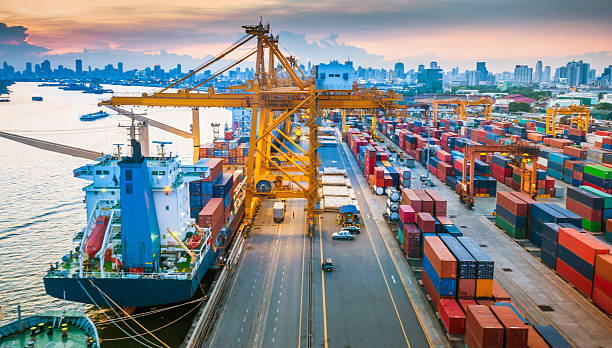
DP World Report reveals high costs, downtime, and reputation risks across regions.
Supply-chain disruption has become a permanent feature of global trade, with companies in Sub-Saharan Africa (SSA), the Middle East and North Africa (MENA), and the Gulf Cooperation Council (GCC) facing the most severe consequences in downtime, costs, and reputational damage.
This is according to a new global report, Without Logistics, released by DP World. The study surveyed 680 senior logistics and supply-chain decision-makers across eight industries and nine regions, concluding that disruption is no longer episodic but a structural reality.
“Disruption is now entrenched but its impact is uneven,” the report says, adding that firms in SSA, MENA, and the GCC are “suffering the longest downtime, highest costs and most severe reputational fall-out.”
The report highlights stark regional disparities. In SSA, 83% of firms report losing more than a month of operational time annually due to major disruptions, compared with 72% in MENA and 61% in the GCC. By contrast, only 50% of North American firms, 41% in Germany, and 36% in the UK report similar losses.
Financially, the burden is significant. Nearly half of companies in the GCC (47%) and more than four in ten in MENA (43%) report annual disruption costs of $1 million or more.
“Most companies report losing more than a month of operational time each year and in many cases, the cost of a single incident runs into hundreds of thousands of dollars. Some companies face disruption losses exceeding 1 million US dollars annually,” the report noted.
The study also found that disruption is more frequent and costly in the Global South, where regions are investing ambitiously in logistics modernisation. Reputational harm is another major challenge, with companies experiencing high levels of customer complaints, lost contracts, and damaged trust.
The report adds: “Across sectors and regions, supply chain disruption continues to threaten time, cost and performance.” It also highlights that “Supply chains are facing more disruption, more often. From port congestion and border delays to extreme weather and geopolitical tension, pressure is coming from multiple directions. Many organisations are still responding far too late.”
DP World’s latest study builds on its Without Logistics series, quantifying costs and identifying resilience strategies. “Business leaders agree that resilient supply chains will be critical over the next three years. The focus now is on how to get there,” the report concludes.