
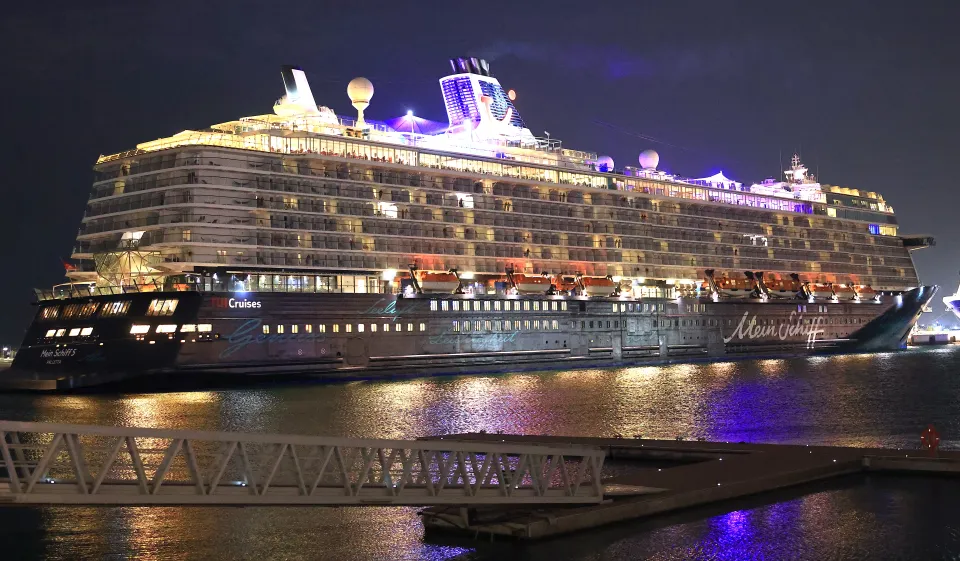
Escalating conflict closes airspace and shipping routes leaving vessels stranded in Dubai, Abu Dhabi and Doha
Thousands of cruise passengers are trapped in Gulf ports due to Iran war, as escalating regional tensions have brought maritime traffic and air travel to a near standstill across parts of the Middle East.
Cruise vessels docked in Dubai, Abu Dhabi and Doha have been unable to sail, leaving holidaymakers confined to ships or stranded ashore while authorities assess security risks linked to the widening conflict involving Iran.
Airspace closures and blocked sea lanes
The disruption follows heightened military tensions in the Gulf region, prompting several countries to close or restrict their airspace. Major aviation hubs have suspended flights, cutting off one of the primary exit routes for international cruise passengers hoping to return home.
At sea, concerns over security in the Strait of Hormuz a vital shipping corridor have further complicated operations. With heightened risk to commercial vessels, cruise operators have opted to delay departures or keep ships berthed until safe passage can be guaranteed.
The combination of closed skies and maritime uncertainty has created a logistical bottleneck, leaving thousands of travellers in limbo.
Cruise itineraries suspended
Cruise lines operating seasonal Gulf itineraries have paused sailings as a precaution. Ships that were scheduled to transit regional waters or reposition between ports are now awaiting clearance.
Passengers onboard have reported extended stays in port, while others who had disembarked for excursions have faced uncertainty about onward travel plans due to cancelled flights and travel advisories.
Operators are continuing to provide accommodation, meals and onboard services, but timelines for departure remain fluid as the security situation evolves.
Broader regional impact
The cruise disruption forms part of a wider travel and trade crisis unfolding across the Gulf. Airlines have rerouted or cancelled flights, cargo shipments are being delayed, and governments are issuing updated travel guidance to their citizens.
The situation underscores the strategic importance of Gulf transport corridors, particularly at a time when geopolitical tensions are high. The Strait of Hormuz alone handles a significant share of global energy shipments, making stability in the region crucial not only for tourism but for global supply chains.
What happens next
Diplomatic efforts are under way to prevent further escalation, while maritime authorities continue monitoring vessel movements and security alerts. Cruise companies are working closely with port officials and international agencies to determine when safe sailings can resume.
For now, thousands of cruise passengers remain stranded in Gulf ports, watching developments closely and waiting for the green light that will allow them to continue their journeys home.