
Infrastructure, technology, safety and people will all play a role in making South Africa’s logistics network more reliable and competitive
South Africa’s logistics sector is under pressure to move more freight, reduce costs and improve reliability. However, the solution is not only putting more trains, trucks or machines on the road. It is about building a freight system where infrastructure works, technology supports people, safety remains a priority and every part of the supply chain works towards the same goal.
Theo Johnson, General Manager of the Coal Business Unit at Transnet Freight Rail (TFR), says it all starts with getting the basics right.
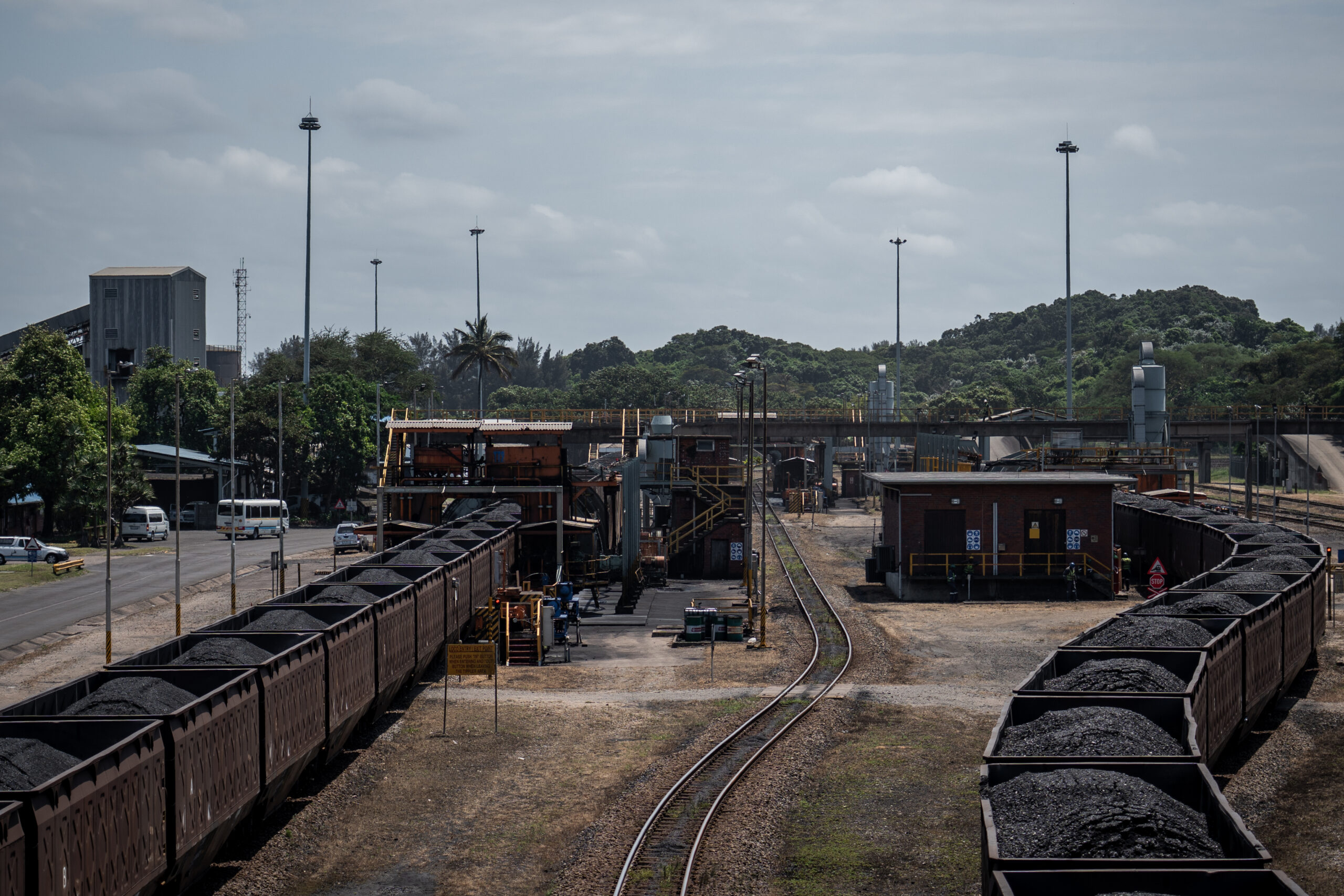
One of TFR’s current focus is on infrastructure maintenance and addressing backlogs that have constrained capacity across the rail network. On the coal line, this includes annual shutdowns to rehabilitate sections of the line and remove speed restrictions, with the aim of returning infrastructure to optimal operating capacity.
Their main objective is to move trains safely, reliably and as efficiently as possible.
“We are working on rehabilitating some of the areas where we are challenged so that we can clear out speed restrictions and make sure that once the line is given back, it’s given back at optimal capacity levels,” Johnson says.
Infrastructure is only one part of the equation. TFR is also modernising its rolling stock by introducing new locomotives on the coal line and gradually retiring legacy locomotives that have been operating for more than four decades.
They are also upgrading the wagon fleet with newer technology and faster braking systems designed to improve both performance and safety.
For Johnson, modernisation is therefore not just about one major technological intervention. It is a combination of infrastructure, equipment and people working differently.
“Our objective is to get a train to its destination as quickly and as safely as possible,” he says.
Technology that supports people
That approach extends to the growing role of digital technology, automation and artificial intelligence in freight operations.
For TFR, technology is increasingly being used to move from reactive maintenance towards identifying potential problems before they become failures. Johnson says the company is looking at ways in which technology can provide early indications of when infrastructure or equipment needs attention, reducing the reliance on waiting for a fault to occur.
Locomotive tracking systems are also being deployed, providing more than just visibility of where an asset is on the network. The information can be used to examine fuel and electricity consumption and identify opportunities to improve how rolling stock is operated.
The intention is not to create a railway where technology replaces people.
“The objective is to make sure that infrastructure has got technology that will be depicting a fault before a fault happens,” Johnson says.
He adds that using technology to reduce manual intervention does not mean removing people from the business. Instead, employees can be redirected towards other functions where human judgement and expertise remain important.
It is a distinction that becomes particularly relevant at the Richards Bay Coal Terminal (RBCT), where automation is already changing the way some machines operate.
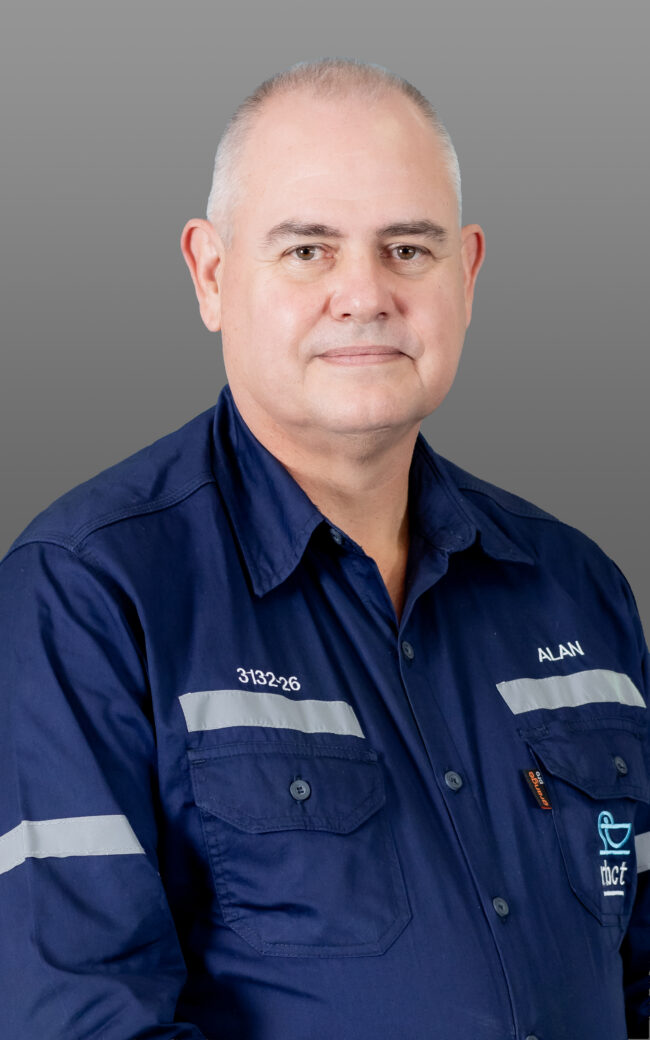
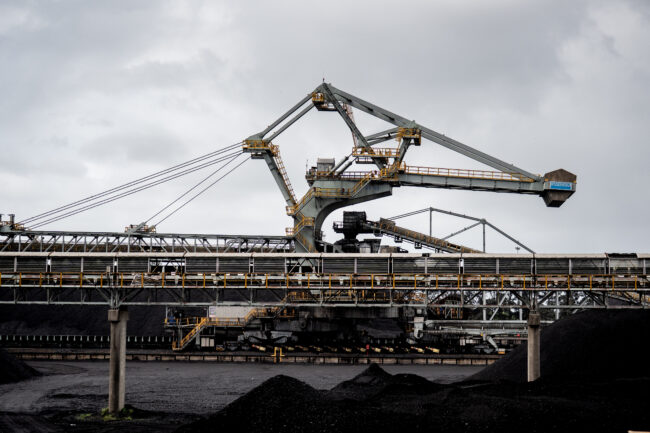
Alan Waller, CEO of RBCT, says the Terminal is in the process of automating its stockyard machines, with all 10 machines expected to operate without on-board operators by the end of 2027.
The project is aimed primarily at improving operational efficiency instead of replacing the people currently operating the machines.
“We haven’t done it to take people off the machines. We’ve done it from an operational efficiency point of view,” Waller says.
The results so far have exceeded expectations. RBCT initially based the project on an anticipated 5% optimisation, but the machines that have already been automated are achieving between 7% and 10% optimisation.
Automation also reduces the number of machine stops and breakdowns while removing operators from the line of fire.
Importantly, Waller says employees will not simply disappear as machines become automated.
“What we’ve agreed with our labour forces is that we won’t retrench anyone in the process. We’ll repurpose people for that process,” he says.
That offers an important perspective on the future of automation in logistics. The machines may increasingly perform the physical operation, but people remain central to managing, maintaining and improving increasingly sophisticated systems.
Safety remains fundamental
While technology can improve efficiency, both Johnson and Waller emphasise that safety cannot be treated as a by-product of better operations.
At TFR, Johnson highlights the importance of changing safety mindsets among employees, ensuring that teams remain focused on getting trains to their destinations safely.
At RBCT, safety sits at the centre of the Terminal’s operations. Waller says the company recently achieved 212 days without an injury, its best injury-free performance to date.
For a facility handling millions of tonnes of bulk material, maintaining that record requires more than compliance. It requires safety to be built into daily decisions and operating practices.
The same philosophy applies to environmental management.
Sustainability beyond compliance
RBCT has invested in a range of measures aimed at reducing its environmental footprint, including water-saving infrastructure, dust mitigation and continuous particulate monitoring.
Following the Terminal’s 2010 expansion to 91 million tonnes, environmental settling ponds helped reduce water consumption by 50%.
Dust management has also become a major focus, particularly because Waller says much of the dust generated at the Terminal comes from roads rather than the stockpiles themselves.
The Terminal uses atomised mist cannons and dust buckets, while particulate monitoring systems track PM2.5 and PM10 levels around key operational areas.
Energy consumption is another area where relatively small operational changes can make a difference at scale. RBCT monitors the energy draw of its machines and looks at issues such as idling times for locomotives and equipment.
Their principle is that if a machine does not need to be running, it should not be consuming energy unnecessarily.
TFR is taking a similar approach with its diesel fleet. While much of the country’s major freight routes are electrified, diesel locomotives remain an important part of the operation. Automatic shutdown mechanisms can therefore reduce unnecessary idling and emissions.
At both organisations, sustainability is being addressed through practical changes to how existing infrastructure and equipment are used.
A network that works together
But even the most modern locomotive or automated yard machine cannot solve South Africa’s logistics challenges in isolation.
Johnson believes collaboration between government, logistics operators and private-sector participants will be essential as additional train operating companies enter the rail network.
He says the main focus should be creating a system where different operators contribute towards a shared national logistics objective instead of competing against one another.
He adds that by walking towards a similar path, achieving the target of 250 million tones by 2030 is very much possible.
For the coal industry in particular, the ability to move cargo efficiently from mine to port remains critical.
Waller agrees that restoring rail to its design capacity represents one of South Africa’s biggest opportunities.
RBCT is designed to handle large volumes efficiently, but that efficiency depends on a reliable flow of cargo into the Terminal.
“We work best when we run hard and we run fast,” Waller says.
He adds that the more tonnes that can be moved through the network, the lower the cost per unit becomes. That improves the competitiveness of mines and, ultimately, the country’s ability to compete in international markets.
South Africa continues to produce coal that is sought after in global markets. The challenge is ensuring that the country’s logistics infrastructure can move enough of it to those markets at a competitive cost.
That brings the conversation back to the fundamentals: reliable infrastructure, modern equipment, smart technology, safer operations, responsible environmental management and cooperation across the logistics chain.
For Johnson and Waller, the future of South Africa’s freight sector is therefore not about choosing between people and technology, or growth and sustainability.
It is about making the entire system work better.
And in that system, smarter machines may increasingly carry out the work, but the people operating, maintaining, managing and improving those systems still have an important role to play.