
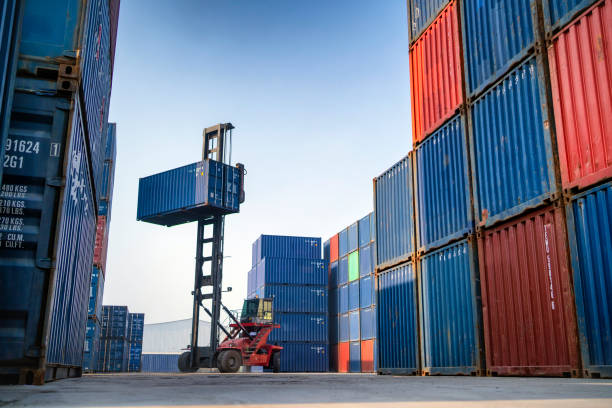
Trade corridors across Asia are expanding rapidly as global supply chains undergo a major realignment, according to Citigroup.
Its latest Global Perspectives & Solutions report, titled “Supply Chain Financing – Durable Global Trade in the Age of AI”, highlights how South Asia and ASEAN are emerging as key beneficiaries as multinational firms diversify production bases and sourcing networks across the region.
The report notes that global trade is being fundamentally transformed by tariff volatility, artificial intelligence adoption, and the shift toward multipolar, regionalised supply chains.
Despite challenges, businesses have shown resilience, adapting quickly to policy changes while maintaining a strategic focus on diversification and working capital optimisation.
Adoniro Cestari, Citi’s global head of trade and working capital, emphasised the role of technology in reshaping trade finance.
“AI-powered intelligent document processing enables exceptionally high accuracy rates and reduces processing to just minutes,” he said.
“Through a pilot of blockchain-based conditional trade payments, we have seen the potential for an evolution from standard paper-based guarantees to near 24/7 digital execution and automated settlement,” Cestari added.
The report draws on Citi’s proprietary Global Supply Chain Pressure Index, daily payment flows of more than US$5 trillion processed by its Services business, and survey responses from multinational corporations and SMEs.
Regional Supply Chains and Trade Flows
Even amid US tariff increases from 2.4% to approximately 16.8%, the index shows supply chain pressures remain near pre-pandemic levels. Companies have mitigated tariff shocks through strategic inventory management, supplier diversification, and accelerated nearshoring initiatives.
South Asia and ASEAN have benefited substantially, with shipments from North and East Asia rising 44%. Latin America’s integration into Asia- and North America-linked supply chains has deepened, with exports to South Asia and ASEAN surging 82%, the highest globally.
The US has also diversified its import base, with shipments from South Asia and ASEAN increasing 50% and from Latin America up 43%, both exceeding the 32% growth from North and East Asia.
AI and Capital Investment in Trade
The report highlights how AI is driving a once-in-a-generation capital expenditure supercycle in data centres. Citi Research estimates US$7.75 trillion in global AI-related capex by 2030.
Trade finance is increasingly critical in this ecosystem, providing solutions such as supply chain finance and structured receivables programmes to support capital-intensive AI infrastructure development.
AI adoption in trade finance has accelerated, with 36% of large corporates now using AI tools, an 18% increase from the previous year. Cestari noted that these innovations, combined with structuring expertise, help companies unlock trapped liquidity, optimise working capital, and support more efficient supply chains globally.
Working Capital as a Strategic Imperative
Working capital management is now a C-suite priority, with 64% of companies citing rising input costs as their main concern. On average, 6.3% of working capital is tied up in funding tariff costs. Companies are responding by deploying inventory finance, structured receivables programmes, and dynamic discounting to release liquidity.
Citi’s survey of 710 large corporations shows that 65% are actively diversifying supply chains away from one or more countries, with Vietnam, Thailand, India, and Mexico emerging as preferred destinations for strategic sourcing and production.