
Energy does not merely power economies. It defines them
When electricity flows consistently, factories operate, mines expand production, small businesses open their doors with confidence, and investors commit capital without hesitation. When it falters, development slows.
In South Africa’s case, energy reform has become synonymous with economic reform.
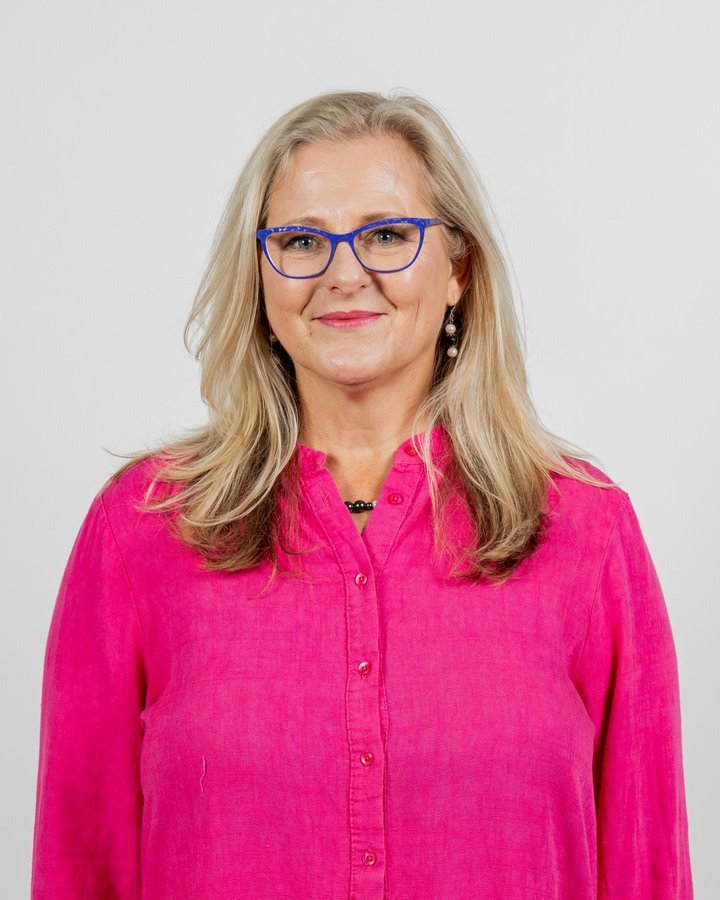
In an exclusive interview with Mining Business Africa ahead of Africa Energy 2026, the Deputy Minister of Electricity and Energy of South Africa, Samantha Graham-Maré, outlined how the country is repositioning energy not simply as infrastructure, but as a strategic catalyst for long-term development both domestically and across the continent.
At the centre of this strategy lies policy certainty.
“The IRP is essentially your electricity blueprint for the short, medium, and long term,” she said. “Without an IRP, you have no policy certainty. You have no blueprint to work from, and you have no idea what sort of pipeline investments you are going to have.”
That clarity matters. For years, uncertainty around South Africa’s Integrated Resource Plan has stalled industrial decision-making. Manufacturers could not confidently localise. Developers hesitated. Capital waited.
“Only once that IRP came out were people able to then say, ‘We foresee there is going to be 17 gigawatts of wind that is going to be installed.’ Manufacturers of wind energy components can then look at that and say, ‘Okay, it is a sufficient pipeline for us to invest in manufacturing in South Africa.’”
Energy planning, she emphasised, is not about megawatts alone. It is about building an industrial ecosystem.
“It creates an environment where people are looking at investment not just in wind or solar or battery energy itself, but also in manufacturing and the service industry as well.”
This is where renewable energy becomes an economic multiplier.
Yet generation alone is not enough. Transmission has emerged as a critical constraint. South Africa’s grid was historically designed around coal-fired generation concentrated in Mpumalanga. Renewable resources, however, are strongest in the Northern Cape, Eastern Cape, and Western Cape.
“We started bringing all these programmes online and then discovered that our renewable energy resources are not located where our coal resources are,” she explained. “Our grid was really focused on the coal belt because that is obviously where we were getting the most supply.”
The result was a bottleneck. Renewable energy projects could not connect to the grid at scale.
“So, we identified then, having done a study, that we need about 14,000 kilometres of transmission line.”
That figure is transformative. It represents one of the most ambitious grid expansions in the country’s history.
To accelerate delivery, the government introduced an Independent Transmission Programme, running parallel to the Transmission Development Plan managed by the National Transmission Company of South Africa.
“What we have done with the transmission programme that we are running from the department side is that we have split the 14,000 kilometres into a 10-year programme. So, it is about 1,400 kilometres a year that we need to develop.”
The first rollout alone covers 1,164 kilometres, with the majority unlocking renewable capacity in the Northern Cape.
“We went and identified the sort of lines and nodes that would unlock the most capacity for the least amount of spend.”
Importantly, the projects were divided into seven packages to mitigate delivery risk.
“We felt that to give one project to one bidder would put us at risk because if there was a problem with that bidder on that project, we would lose that entire year’s worth of transmission rollout.”
Financing, too, is being structured innovatively.
“This is not going to be funded by the Treasury. It is a credit guarantee vehicle that we have developed in partnership with the World Bank,” she said. “Ultimately, the idea is that the credit guarantee vehicle is a more attractive vehicle for financing than a sovereign loan from a country, so they can get better rates and better outcomes.”
Preferred bidders are expected to be announced in alignment with the finalisation of the credit guarantee mechanism.
While grid reform progresses domestically, South Africa’s energy ambitions are expanding continentally.
After its recent G20 engagement, the country recognised the need for stronger African leadership.
“After G20, we realised that as South Africa, we really needed to take more of a leadership role in Africa,” she said. “With 600 million Africans having no access to energy, the rollout of renewable energy has become of paramount importance.”
South Africa is participating in the scaling-up renewables programme with the European Union, linked to Mission 300 alongside the World Bank and the African Development Bank. The goal is to extend energy access to 300 million Africans.
“These countries have given us a substantial amount of money to do our just energy transition, to do that move from coal to renewables,” she noted, referencing the International Partners Group supporting South Africa’s Just Energy Transition.
When asked whether the United States’ withdrawal from parts of the Just Energy Transition funding created a gap, she was candid.
“No, it did because they pulled out quite a substantial amount of money that had been committed through the JET programme,” she said. “But that gap was very quickly filled. Europe has proven itself to be a wonderful partner for South Africa and for Africa.”
She added that collaboration with the United States is not permanently closed.
“America’s not our enemy; they are just not our partner at this point,” she said. “I don’t think it is an absolute exclusion.”
Meanwhile, partnerships are diversifying.
“We are also getting a lot of Asian countries that are coming forward and wanting to collaborate and partner. They have a lot to teach us. There is a lot for us to learn.”
China continues to play a visible role in both South Africa and across the continent, though diversification remains essential.
“You don’t want to be beholden to one country that ultimately then exercises too much control in your own country. Our sovereignty is important, and that requires us to be very careful in terms of the geopolitical landscape that we navigate.”
Africa Energy 2026, she believes, will reinforce South Africa’s investment case.
“What Africa Energy will do is showcase that South Africa is open for business,” she said. “Not just as South Africa, but that South Africa is open for business to support the rest of the continent with their energy ideals.”
The message to investors is layered. The IRP provides certainty. The Renewable Energy Master Plan anchors industrialisation. The transmission investment demonstrates commitment. A critical minerals strategy supports beneficiation and green hydrogen ambitions.
“It is a country that is serious about renewable energy. It is serious about industrialising around renewable energy. It is serious about new technology,” she said. “We believe that it is a country that is worth investing in in terms of the renewable energy space.”
For Mining Business Africa readers, the most compelling part of the conversation may be the interplay between mining and energy.
“In simple terms, it is really a very, very circular economy,” she explained.
“If you look at energy now, 85 percent of our power comes from coal-fired power stations. So, we need coal to generate electricity. Obviously, coal needs to be mined.”
Mining itself is energy-intensive.
“Coal mines, per se, are very heavy users of electricity, so obviously they need electricity to power the coal mining operations.”
Beyond coal, critical minerals form the backbone of renewable infrastructure.
“Your platinum group metals are needed to build energy infrastructure. We need them to make batteries. We need steel to build our transmission lines. We need the platinum group metals for electrolysis to do green hydrogen.”
The relationship is inseparable.
“It is an absolutely circular economy where both mining and energy are completely reliant on each other for the success of both.”
As global markets increasingly demand greener supply chains, mining operations are also integrating renewables into their own energy mix to preserve the integrity of so-called green value chains.
“None of that can happen without the other,” she concluded. “That interplay between mining and energy is absolutely critical and fundamental to both environments.”
In a country long defined by its mineral wealth and now reshaping its energy architecture, that interplay may well determine the trajectory of its next growth chapter.
Energy, as the Deputy Minister’s remarks make clear, is no longer a constraint or a narrative. It is a development narrative.
And increasingly, it is a continental one.