
New agreements covering a 535km railway and supporting energy infrastructure add to plans for the Kobe-Kobe mineral port, creating a proposed export route for iron ore from north-eastern Gabon
Gabon has signed new partnership agreements covering railway and energy infrastructure for its Belinga iron ore project, bringing the country closer to establishing a transport route between the inland deposit and a planned export port on the Atlantic coast.
The agreements were signed in Shanghai on November 5 during President Brice Clotaire Oligui Nguema’s state visit to China. They form part of the wider Belinga–Kobe-Kobe development, estimated to require about US$10 billion in infrastructure investment.
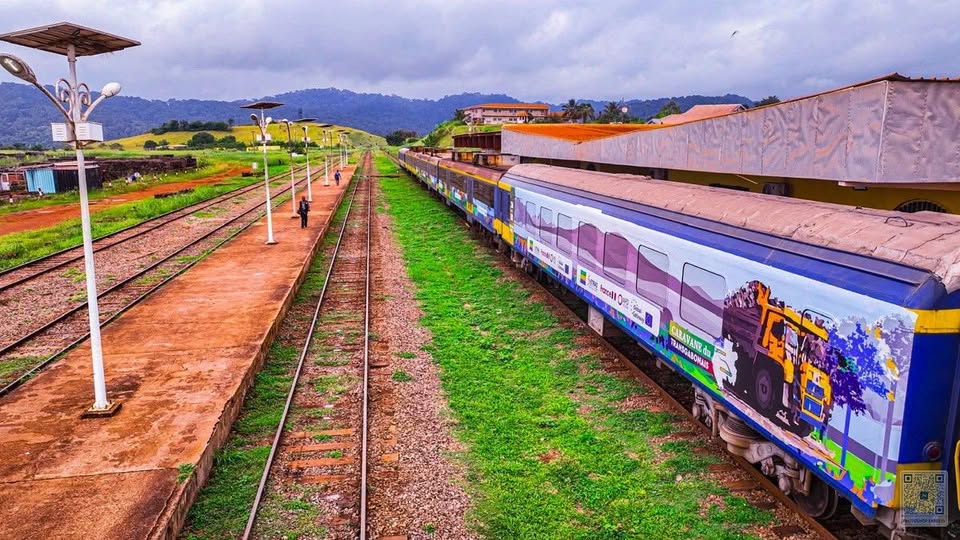
At the centre of the plans is a railway of approximately 535km that will connect the Belinga deposit in north-eastern Gabon to the proposed mineral port at Kobe-Kobe. The line is intended to provide the capacity to move iron ore from the mining area to the coast for shipment to international markets.
The railway agreements complement an earlier arrangement signed in April between the Gabonese government, Africa Global Logistics (AGL) and Algest Investment Bank for the development of the Kobe-Kobe port. Construction work at the port site was officially launched in June.
The port development covers about 500 hectares and includes four berths. It forms part of a wider infrastructure plan that also includes a proposed 400MW hydroelectric installation at Booué to supply power to the integrated project.
China Harbour Engineering Company (CHEC) is among the companies involved in developing the transport infrastructure. AGL is partnering with CHEC on the port and railway development, with AGL expected to operate the Kobe-Kobe port once it is completed.
Other companies have roles across the corridor. Gabon’s transport ministry has identified Wabtec and Progress Rail as participants in the supply of wagons and locomotives, while Fortescue is responsible for the mining development through its Gabonese venture. Trafigura is expected to support the international marketing of the iron ore.
The scale of the proposed railway and port reflects the transport requirements of developing Belinga into a large-scale mining operation. The deposit is located in Ogooué-Ivindo province, where access to export infrastructure has been one of the challenges facing its development.
Without a dedicated rail connection and a port capable of handling mineral shipments, moving large volumes of iron ore from the deposit to overseas customers would be difficult. The integrated plan is intended to bring mining, rail transport, port handling and electricity supply together.
However, the signing of the latest agreements does not mean that the full corridor is ready for construction or operation. The railway and energy components still need to move through implementation, while the project’s overall financing arrangements and construction schedule have yet to be fully detailed publicly.
The Gabonese government is also looking beyond the export of raw minerals, with plans to support local processing and develop industrial activity around the infrastructure. The proposed corridor is therefore expected to serve as part of a wider effort to increase the contribution of mining to the country’s economy.
For now, the focus will be on turning the agreements into infrastructure that can support the movement of iron ore from Belinga to the coast. The success of the project will depend on how well the mine, railway, port and power facilities are coordinated.