

Air cargo demand dips sharply in March 2026 due to Middle East conflicts and rising fuel costs
The ongoing geopolitical conflicts in the Middle East have cast a long shadow over global air cargo operations, as outlined in the latest data released by the International Air Transport Association (IATA) for March 2026. A notable decline in demand has been recorded, with the global cargo tonne-kilometres (CTK) dropping by 4.8% year-on-year, and international cargo traffic plummeting even further by 5.5% in the same period.
Amidst these troubling figures, capacity has also suffered, reflecting a decrease of 4.7% in available cargo tonne-kilometres (ACTK) compared to March 2025. International operations saw a sharper decline at -6.8%, underscoring the effects of uncertainty in major Gulf hubs, heavily impacted by the ongoing conflict in the region.
“Air cargo demand fell 4.8% in March compared to the previous year. This was mostly due to severe disruptions at major Gulf hubs due to the war in the Middle East. The timing of the usual post–Lunar New Year slowdown also added to the decline,” explained Willie Walsh, IATA’s Director General. Despite the challenges presented, he noted that the underlying demand trends appear resilient. Recent economic forecasts by the World Trade Organisation and the International Monetary Fund continue to highlight expected growth in both trade and GDP for 2026.
Walsh emphasised that air cargo networks are proving invaluable as they adapt to ongoing geopolitical tensions, tariff changes, and operational challenges. However, looming concerns over fuel supply and pricing stand to test the resilience of the industry in the months ahead.
Several factors influencing the air cargo landscape merit attention. Global industrial production recorded a 3.1% growth year-on-year in February, marking 38 consecutive months of expansion. Additionally, global goods trade experienced a robust increase of 8.0% year-on-year during the same month.
Yet, amidst these encouraging signs, March saw a sharp rise in jet fuel prices, which soared by 106.6% compared to the previous year, accompanied by a 43.1% increase in crude oil prices and an astonishing 320% surge in refining margins. These developments present a formidable challenge for air cargo operators.
The global manufacturing sector, while still in a growth trajectory, exhibited a modest slowdown in sentiment. The Purchasing Managers’ Index (PMI) for March recorded a figure of 51.4, signalling ongoing expansion, albeit slightly less vigorous than February, while new export orders held just above the critical 50-point mark at 50.1.
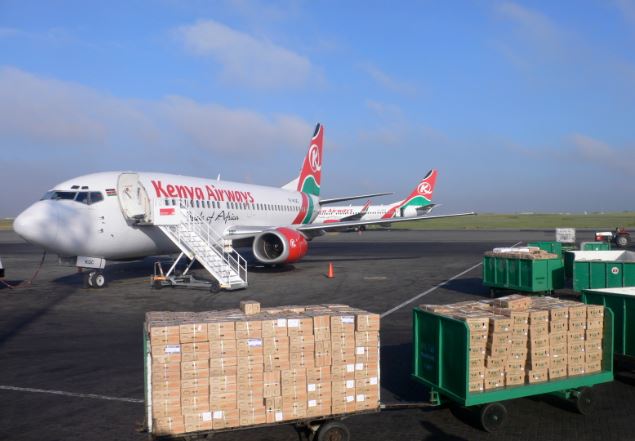
In a contrasting narrative, African airlines reported a robust 7.0% increase in demand for air cargo in March, the strongest growth among all regions. However, capacity in this sector also reflected a decrease, dropping by 4.6% year-on-year, bringing both challenges and opportunities.
As air cargo continues to navigate through turbulent geopolitical waters, stakeholders remain watchful of the economic indicators and operational adjustments that could influence the industry’s recovery and resilience.