

The Phelophepa Health Train shows how rail infrastructure can extend healthcare access, highlighting the wider value of reviving South Africa’s rail network
The Phelophepa Health Trains have returned to Gauteng, bringing essential healthcare services to communities through South Africa’s railway network.
The Transnet-operated mobile healthcare facility is currently stationed at Vereeniging Railway Station in Sedibeng from August 24 to September 4. The trains were also in Dube, Gauteng, and De Wilt, North West, from August 17 to 21.
Launched in 1994, the Phelophepa Health Train was established to bring essential healthcare services to communities that may have limited access to healthcare facilities.
Unlike a conventional clinic, the train moves from one location to another, allowing communities to access a range of healthcare services without having to travel long distances to established medical facilities.
Services available on board include primary healthcare, eye care, dental services, psychological support and pharmacy services.
The Phelophepa model demonstrates that railway infrastructure can support much more than the movement of passengers and freight.
By moving a fully equipped healthcare facility along the rail network, Transnet can bring services closer to communities without requiring a permanent healthcare facility to be established at every location.
The train’s movement between Dube, De Wilt and Vereeniging demonstrates the value of mobility in extending access to essential services.
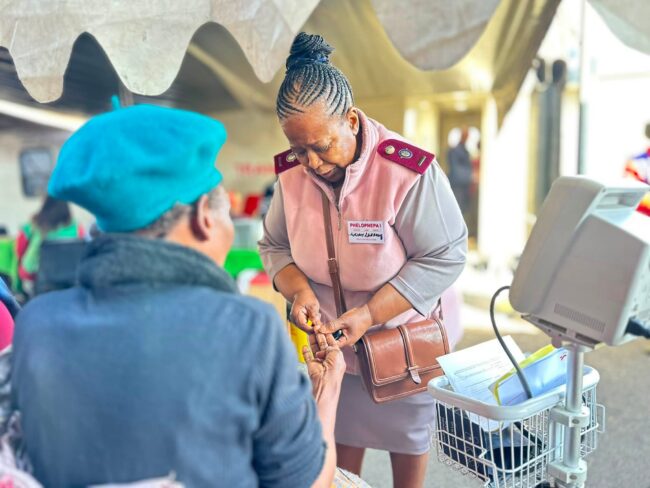
Transnet Board Chairperson Dr Andile Sangqu said he was moved by the commitment of the healthcare teams and the organisation’s ability to make a meaningful difference beyond its core business.
“I was very excited and touched by the work that Phelophepa is doing. The extent to which it is touching communities, connecting with the reality of people and responding to that in ways that are transformative and deeply meaningful,” said Sangqu.
The Phelophepa programme also highlights the wider importance of maintaining and revitalising South Africa’s railway infrastructure.
South Africa has one of the continent’s most extensive railway networks, built over decades to connect cities, industrial centres, mining regions, ports and communities. However, years of underinvestment, ageing infrastructure, operational challenges and security issues have affected the reliability and capacity of parts of the network.
The revival of rail is therefore important not only for moving minerals, manufactured goods and agricultural products more efficiently, but also for unlocking the wider social and economic value of the network.
The Phelophepa Health Train provides a practical illustration of this value. Where railway infrastructure is functional and accessible, it can serve as a platform for services that need to reach communities across large distances.