
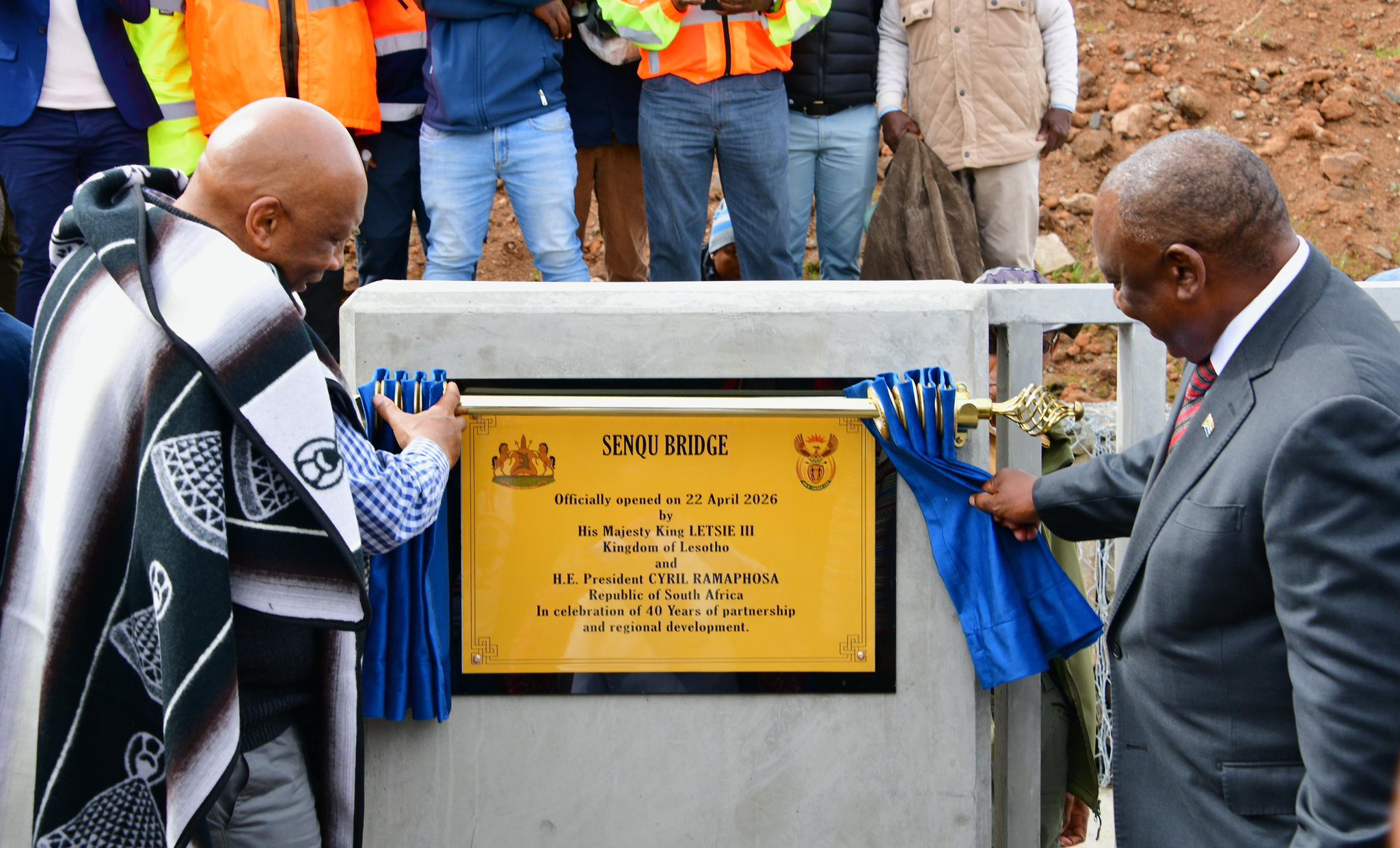
Ramaphosa joins Lesotho leaders to launch 825m landmark bridge under Phase II of the Lesotho Highlands Water Project
South African President Cyril Ramaphosa arrived at Moshoeshoe I International Airport in Lesotho on Wednesday, April 22, to co-launch the Senqu Bridge.
He was joined by King Letsie III and Lesotho Prime Minister Samuel Matekane for the official opening of the structure, now the longest bridge in the country at 825 metres.
Located in Mokhotlong, the Senqu Bridge is Lesotho’s first extradosed bridge. Its completion marks a major milestone under Phase II of the Lesotho Highlands Water Project (LHWP).
During a briefing in Mokhotlong, President Ramaphosa described the bridge, which towers above the river valley at an altitude of more than 2,500 metres, as a symbol of the strong and enduring partnership between Lesotho and South Africa.
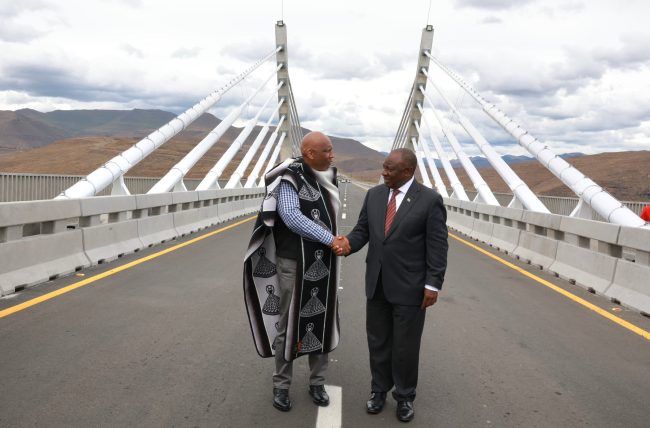
“Together with the two other bridges being constructed to span the Polihali reservoir, this bridge will improve travel across this part of the country, making transport easier and cheaper for communities, businesses and visitors.”
As part of the broader LHWP, the Senqu Bridge has generated at least 1,200 job opportunities, further reinforcing economic cooperation between the two nations.
“The project has employed local engineers, technicians and professionals from both our countries,” said Ramaphosa.
“The Young Professionals Programme, which is now part of the Lesotho Highlands Water Project, is introducing young graduates to the sector.
“Through this programme, we are building the foundation for an infrastructure drive across our region and across our continent.”
Phase II of the project is expected to increase water transfer volumes from 780 million to 1.27 billion cubic metres per year, while also enhancing Lesotho’s hydropower capacity. This will support the country’s progress toward energy security and reduce reliance on imported electricity.
Beyond its engineering significance, the Senqu Bridge is set to play a vital role in improving regional connectivity, enabling economic activity, and supporting long-term integration between Lesotho and South Africa.