
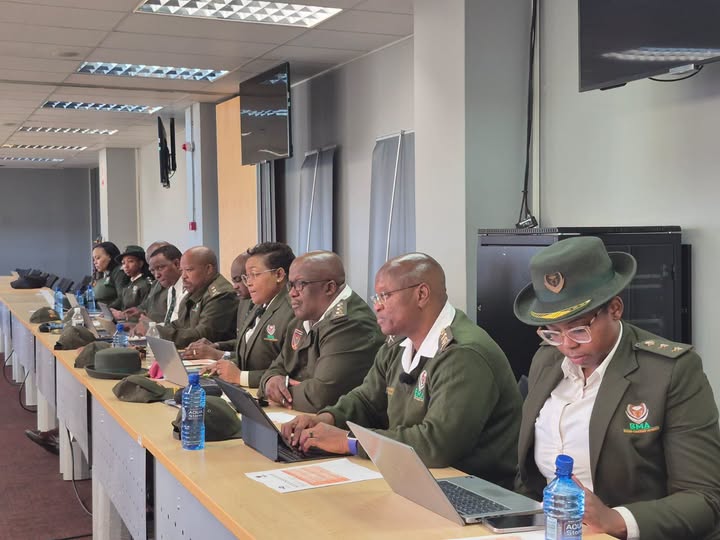
Border Management Authority says joint port management committees are helping South Africa coordinate operations and respond to the needs of cross-border movement
South Africa is working more closely with its six neighbouring countries to improve coordination at shared land borders, with the Border Management Authority (BMA) using joint port management committees to manage cross-border operations.
Speaking to the SADC Broadcast Summit, BMA Commissioner Dr Michael Masiapato said the daily movement of people and goods across South Africa’s borders requires close coordination between the country and its neighbours.
South Africa shares land borders with Botswana, Eswatini, Lesotho, Mozambique, Namibia and Zimbabwe, making efficient border operations important to regional trade and movement.
Dr Masiapato explained that each South African port of entry has a port management committee made up of key leadership within the border environment and led by the BMA’s port commander.
These committees then work with their counterparts in neighbouring countries through joint bilateral committees.
“So, in that instance, we have then what you call the joint bilateral committees, and that is now the port management committee of South Africa and that of the immediate country. We are able to co-ordinate our efforts,”Dr Masiapato said.
The arrangement allows the two sides to respond together when operational changes are required.
For example, where border operating hours need to be extended, the authorities on both sides can engage with each other rather than making changes independently.
For the logistics sector, coordination between neighbouring border authorities is important as delays at border crossings can have a direct impact on the movement of cargo, supply chains and regional trade.
The BMA’s approach is therefore aimed at ensuring that operational decisions at one side of a shared border are communicated and coordinated with the authorities on the other side.
With SADC placing greater emphasis on regional integration, infrastructure and stronger regional value chains, effective border management remains an important part of making cross-border trade work in practice.