
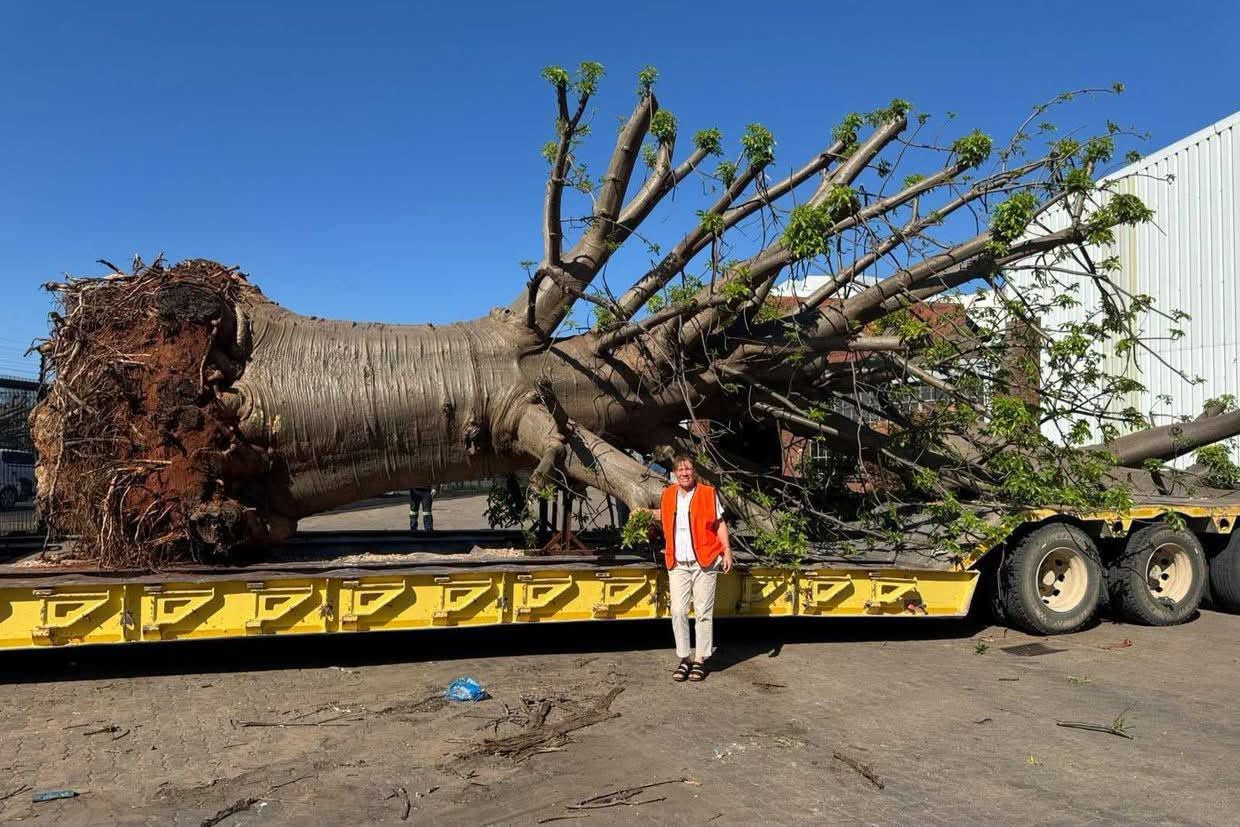
The 900km relocation from Durban to Limpopo involves abnormal-load transportation and specialised handling to move five mature baobabs to their new conservation home
Five mature baobab trees, each weighing up to 30 tonnes, are being transported from Durban to the Timbavati Private Nature Reserve in Limpopo following their interception while awaiting export to Georgia.
The relocation operation began on November 11, 2026, when the first tree was loaded onto an abnormal-load truck for the approximately 900km journey to its new home.
The five trees, estimated to be between 200 and 300 years old, had been held at an Africa Global Logistics (AGL) warehouse in Durban’s Mobeni industrial area since July 17, after authorities stopped their planned export.
Their movement presents a specialised transport undertaking, requiring careful planning and handling due to their considerable size, weight and condition. The trees had spent more than three months lying on their sides in a warehouse parking area, where exposure to the sun and heat caused dehydration and shrinkage.
According to the Timbavati Private Nature Reserve, the relocation required specialised transport arrangements and careful handling, particularly given the time the trees had spent out of the ground.
The rescue initiative was led by ecologist Dr Sarah Venter, founder of the Baobab Foundation, who helped mobilise funding for the operation. Former Durban Botanic Gardens curator Christopher Dalzell also volunteered his expertise to support the relocation.
The Department of Forestry, Fisheries and the Environment (DFFE) is working with the South African National Biodiversity Institute (SANBI) to facilitate the intervention.
The trees were reportedly removed from the Lephalale area in Limpopo and transported to Durban for export to Georgia. However, the DFFE established that the exporter, Pretoria-based Divine Landscapes, did not have the required licences and permits for their removal, transportation and export.
The department rejected the company’s retrospective permit applications, while its final appeal was dismissed on October 27, 2026.
The trees were subsequently earmarked for relocation to Timbavati, where they will undergo a recovery process aimed at giving them the best opportunity to survive.