

Women in logistics, transport and supply chain were urged to move beyond simply occupying seats in the industry and take a more active role in leadership, technology and the decisions shaping the sector
Women in logistics should not have to constantly prove that they belong in an industry where they are increasingly making their mark, delegates heard at the Chartered Institute of Logistics and Transport South Africa (CILTSA) Women Empowerment Conference.
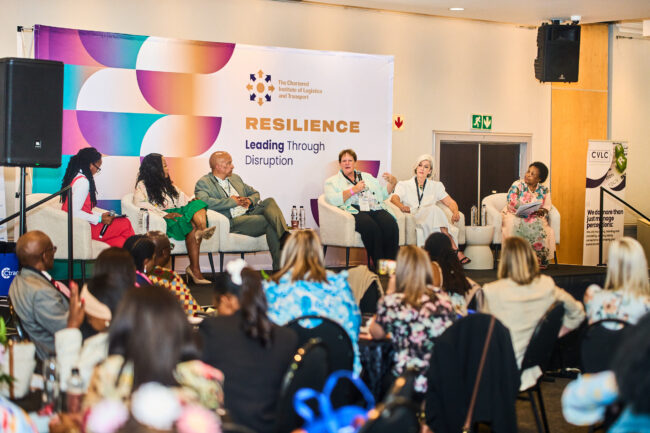
Held at Birchwood Hotel and OR Tambo Conference Centre in Boksburg on September 18, the conference brought together women from across logistics, transport and supply chain under the theme “Resilience Reimagined: Leading Through Disruption.”
The discussions focused on leadership, technology, disruption, representation and the need for women to take a more active role in shaping the industry rather than waiting for opportunities to be offered to them.
Opening the conference, Lebo Rakgekola, Department Executive for Light Commercial Vehicle Sales at Isuzu Motors South Africa, challenged the way women’s participation in traditionally male-heavy sectors is described.
“Let’s build an industry where women can lead without having to constantly prove that they belong. We are not in male dominated industries, we are in male populated industries.”
That distinction speaks to a broader change taking place across logistics and transport, where women are increasingly moving into leadership, operational and technical roles.
CILTSA’s programme featured 18 women leaders alongside male allies, with speakers drawn from companies and organisations including Ctrack, Absa, Isuzu Motors South Africa, Röhlig-Grindrod Logistics, Gauteng Women in Transport, Traxtion, Resolution Circle, Nelson Mandela University, Commerce Edge, the Commercial Transport Academy and Safer stops Association.
Digital skills was one of the important elements of the conversation, particularly as logistics companies increasingly depend on data and technology to make operational decisions.
Maserati Ramokadi, Transport and Logistics Analyst at Absa,stressed that women entering or advancing in logistics do not need to become programmers or collect endless qualifications to remain relevant in a technology-driven industry.
Instead, she encouraged women to understand the fundamentals of data and how emerging technologies, including artificial intelligence, are being applied in logistics.
Her message was that technology should not be viewed as something reserved for specialists. Understanding how data is generated, interpreted and used can give logistics professionals a better grasp of how their businesses operate and where technology can improve them.
This is becoming increasingly important as companies use digital systems across areas such as fleet management, route planning, warehousing, forecasting and supply chain visibility.
For women seeking leadership positions, understanding the technology behind these operations can also mean being better equipped to participate in decisions about how businesses invest in and use digital tools.
The conference also returned to the issue of representation, but with an emphasis on what happens once women are in the room.
Speakers argued that representation should extend beyond employment numbers and include women’s participation in decisions about the products, systems and services used across the industry.
One example raised during the discussions was the design of vehicle seatbelts. Products designed primarily around male body dimensions can create challenges for pregnant women and women with different body shapes.
The example highlighted the importance of having women involved in product development and decision-making from the beginning, rather than expecting products designed around a largely male user profile to accommodate women afterwards.
The same principle applies to logistics.
From vehicle design and safety equipment to workplace facilities, technology and operational systems, the people using these products should have a voice in how they are designed.
For an industry that serves a diverse workforce and customer base, that input can influence whether products and systems work effectively for everyone who depends on them.
Lebo Letsoalo, Founder of Sincpoint and the African Women in Supply Chain Association, also highlighted the need for professionals entering transport and logistics to understand the markets in which they intend to operate, particularly as the sector continues to deal with global supply chain disruptions.
“When you want to go into transport, you must know where you want to operate.”
The point is particularly relevant for women building businesses in logistics, where understanding a specific market, its customers and its supply chains can be as important as securing access to capital or equipment.
The conference encouraged women to take ownership of their careers and businesses rather than waiting for traditional pathways into leadership to open up.
That message was reflected in the structure of the event itself. CILTSA included a mentorship matchmaking session, networking opportunities and the Imbokodo Hub alongside the formal conference programme.
The organisation also said the event was designed to create opportunities for connection, mentorship and practical conversations around building careers and businesses in the sector.