
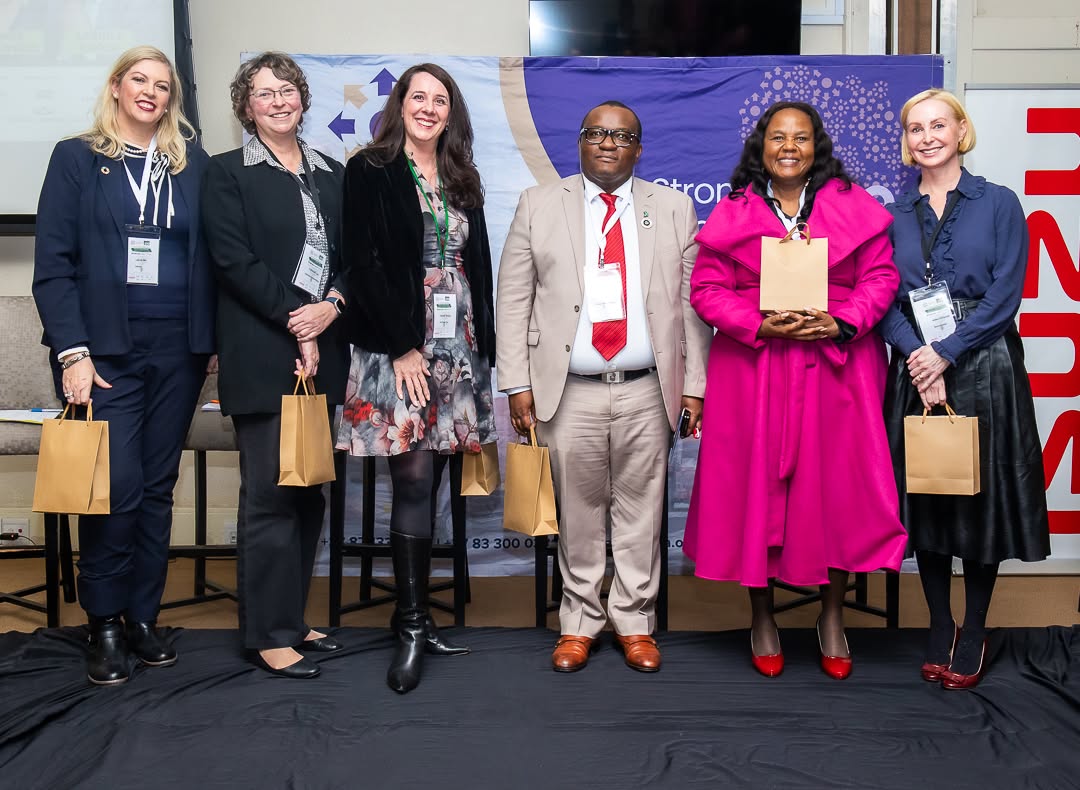
Industry leaders say stronger collaboration, practical education, leadership and adaptability will be critical to developing ESG capability in the transport and logistics sector
As environmental, social and governance (ESG) considerations become increasingly embedded in business strategy, the logistics and transport sector faces a critical challenge: ensuring that its workforce is equipped with the skills needed to thrive in a rapidly evolving landscape.
This was one of the key themes discussed during the Talent Panel: Closing the Skills Gap-Building ESG Capability for 2030 and Beyond, held at the Chartered Institute of Logistics and Transport South Africa’s (CILTSA) ESG Conference at the IMM Graduate Institute in Parktown, Johannesburg.
Moderated by Liesl de Wet, Head of Organisational Sustainability at Unitrans and Chairperson of the Road Freight Association’s Green Transport Working Group, the session brought together industry leaders, educators and sustainability specialists to examine how the sector can prepare future talent not only to understand ESG principles, but to apply them in practice.
A recurring theme throughout the discussion was that ESG capability extends far beyond compliance requirements. Instead, it requires a combination of technical expertise, human-centred skills, systems thinking, and stronger collaboration among academia, industry, and policymakers.

Future skills will be interdisciplinary
According to Sandile Khoza, Chairperson of the Ethekwini Maritime Cluster and CILTSA Council Member, the workforce of the future will require a very different set of skills from those traditionally associated with logistics and supply chains.
“We are moving away from the historical skills that we have traditionally relied on and towards interdisciplinary skills that are relevant to the realities of a rapidly changing world. The people we need in the future must be equipped to respond to emerging challenges and opportunities as they arise,” said Khoza. “If you look at the pace at which technology is evolving, areas such as data, data science and data centres will become increasingly important. These are the kinds of capabilities that will shape the future workforce and determine how effectively organisations respond to change.”
He added that technological advancement and digital transformation are already reshaping industry requirements, making continuous learning and adaptability essential.
Soft skills will be critical for ESG success
Maphefo Ano Frempong, CEO of the Transport Education and Training Authority (TETA), emphasised that technical knowledge alone will not be sufficient to build an ESG-ready workforce.
She argued that the most valuable capabilities for future professionals are often the least tangible.
“When I think about a workforce that is truly able to integrate ESG into daily operations, I see a blended, multigenerational workforce where experienced professionals and younger talent work together. However, the most important skills are often referred to as soft skills. The ability to innovate, adapt, collaborate and negotiate will be critical. Equally important is the ability to empathise with communities, engage meaningfully with stakeholders and communicate in a way that people understand. ESG cannot become a compliance exercise or a tick-box activity; it must be something that people genuinely connect with.”
Her comments highlighted the growing importance of emotional intelligence and stakeholder engagement in achieving sustainability objectives.

ESG is about making better decisions
For Aimee Girdwood, Founder of Stories Evolved, ESG capability is ultimately about improving decision-making across organisations.
She explained that ESG should not be viewed as a standalone function but rather as a lens through which every business decision is evaluated.
“ESG capability is really about making better decisions. It is highly context-specific and depends on your organisation, your role and the environment in which you operate. It cannot sit in a separate department down the corridor and be owned by a handful of specialists. Every person within the organisation needs to understand how ESG applies to their role and how the decisions they make impact communities, the environment and the long-term sustainability of the business. The reality is that ESG capability is never fully achieved because the context is constantly evolving, requiring businesses and individuals to continually adapt.”
Girdwood added that organisations must become more comfortable having difficult conversations around sustainability, risk, governance and long-term priorities if they are to make meaningful progress.
Embedding ESG into organisational culture
Prof Rose Luke, Associate Professor at the University of Johannesburg, stressed that ESG cannot be treated as a standalone subject or occasional initiative.
Instead, she believes it must become embedded within organisational culture and everyday decision-making.
“People will only implement something if they can clearly see the value in it. That is why we need to build a strong business case for ESG and ensure that value is visible in every decision we make. More importantly, ESG needs to become part of organisational culture. Just as habits are formed through our environment and daily experiences, sustainability principles should become embedded in everything we do. Rather than producing ESG specialists alone, we should be integrating ESG thinking into every discipline and every role.”
Luke argued that ESG capability becomes far more effective when it is woven into existing systems and behaviours rather than treated as a separate function.
Skills gap or systems misalignment?
While much of the discussion focused on skills development, panellists questioned whether South Africa’s challenge is truly a skills shortage.
Frempong argued that the country is facing a skills mismatch caused by weak alignment between education institutions and industry needs.
“We have an abundance of skills in areas that the economy does not necessarily require. The problem is not simply a lack of skills; it is a disconnect between academia, industry and society. In many cases, universities continue to focus heavily on theory while industry evolves much faster. We need stronger partnerships where curriculum is co-designed with industry, lecturers are exposed to operational environments, and students gain meaningful workplace experience before they graduate.”
She pointed to examples from countries such as Russia, India and China, where close collaboration between education providers and industry helps ensure graduates enter the workforce with practical, relevant skills.
Khoza echoed these concerns, describing the challenge as a broader systems failure rather than a skills shortage.
“The issue is not a skills shortage. The issue is systems misalignment. Education continues producing graduates based on legacy qualifications that are no longer aligned with industry needs, while businesses are evolving much faster than curricula can keep up. At the same time, policymaking processes often move too slowly to support the pace of change. The result is that graduates leave university with qualifications but struggle to find opportunities because the systems responsible for preparing them are not sufficiently connected.”

Leadership and change management will shape the future
Chantal Harding of People Shop concluded that one of the most overlooked skills in ESG transformation is change leadership.
According to Harding, organisations often focus on frameworks, policies and technology while neglecting the human factors that determine whether change succeeds.
“Businesses are ultimately run by people, and every major transformation depends on people changing how they think and behave. What we need is not necessarily more frameworks or policies; we need leaders who can create buy-in, inspire action and guide people through change. Alongside that, organisations need decisiveness, ethical decision-making and a long-term mindset. The future belongs to those who can make informed decisions quickly, learn from failure and continue adapting. ESG is fundamentally about stewardship and creating value that extends beyond the next quarter or financial year.”
A shared responsibility
As the logistics and transport sector prepares for 2030 and beyond, the discussion made one point clear: building ESG capability is not the responsibility of a single institution, employer or government department.
Instead, it will require stronger collaboration between industry, academia and policymakers, as well as a commitment to developing both technical expertise and human-centred leadership skills.
For a sector undergoing rapid transformation, success will depend not only on what people know, but on how effectively they can adapt, collaborate and make decisions in an increasingly complex world.