
Across Africa’s mining operations, slurry systems operate at the centre of production—yet too often at the edge of understanding. From mill discharge to tailings transport and dewatering, these systems carry abrasive, high-density mixtures through complex circuits where even small inefficiencies can translate into significant losses. Despite their importance, slurry systems remain one of the most misapplied and misunderstood components in mining.
The issue is not a lack of technology. It is a reliance on theory.
For decades, pump selection has been driven by curves, calculations, and catalogue specifications. On paper, these systems appear predictable. Flow rates align, efficiencies peak, and performance looks assured. But in the field, those assumptions quickly unravel. Every slurry system behaves differently, shaped by variables that cannot be fully captured in design models alone. Particle size distribution, slurry density, pipe configurations, fluctuating tank levels, and operator practices all influence how a system performs in reality.
The consequence is familiar across the industry. Pumps are pushed outside their optimal operating range, often far from their Best Efficiency Point. The result is accelerated wear, unstable operation, rising energy consumption, and ultimately, unplanned downtime. What begins as a design decision becomes an operational cost.
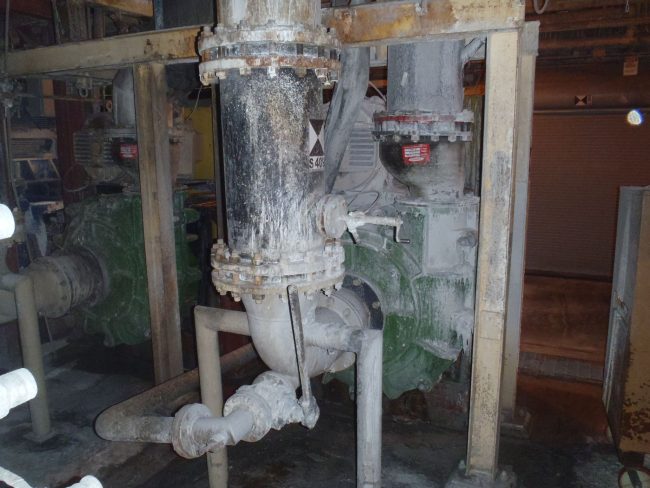
Increasingly, mining operations are recognising that performance cannot be defined at the point of specification. It must be proven under real conditions.
This shift toward field validation is redefining how slurry systems are evaluated. In practice, the true measure of a pump is not how it performs on a curve, but how it behaves over time, under pressure, and within the complexity of an operating plant. Engineers working directly on-site are seeing a consistent pattern emerge: systems that perform reliably are those that have been observed, adjusted, and validated in the field, not simply installed according to theoretical expectations.
This reality is particularly evident when performance claims are tested beyond documentation. In one recent case, a client required confirmation that replacement components would integrate seamlessly with an existing installation. Rather than relying on specifications, the response was practical. Equipment was transported to the site, a pump was rebuilt on location, and components were installed under live conditions. The outcome was immediate and unambiguous. The system operated as required, without modification or compromise. It was not a demonstration of compatibility on paper, but proof of performance in practice.
Such examples highlight a broader truth within slurry systems: certainty is earned through experience.
Nowhere is this more apparent than in the analysis of wear. Inside every slurry pump, wear patterns provide a direct record of how the system has been operating. Erosion, uneven material loss, and localised damage are not random failures. They are signals. They reflect velocity, flow stability, suction conditions, and whether the pump is operating within its intended range. For those who understand how to read them, these patterns offer insight into the system as a whole.
What they reveal, more often than not, is that pumps rarely fail in isolation. Systems fail.
Instability in flow, air entering the system, excessive velocity, or operation outside design parameters all contribute to premature failure. In many cases, the pump becomes the visible point of failure, but the underlying cause lies elsewhere. Addressing these issues requires a shift in perspective—from replacing components to understanding system behaviour.
A recent chrome plant application illustrates this clearly. Persistent failures had been attributed to material limitations, leading to repeated changes in component selection. Different materials were trialled, each offering marginal improvements but no lasting solution. The pattern of failure remained. Only when the system itself was examined did the true cause become evident. High velocities, significant friction losses, unstable feed conditions, and air entrainment had created an operating environment that no material could withstand indefinitely. The system was being forced beyond its natural limits.
This is a recurring theme in slurry systems. When performance is driven beyond what the system can sustain, failure will occur somewhere. If not through blockages, then through wear. If not wear, then through downtime. The system will always find a point of compromise.
Responding to this reality requires more than stronger materials or heavier construction. It demands an application-driven approach to engineering. Equipment must be designed not only for performance, but for the conditions in which it will operate. In Africa, where mining environments are often variable and demanding, this becomes even more critical. Pumps must accommodate changing feed conditions, abrasive materials, and operational variability without sacrificing reliability.
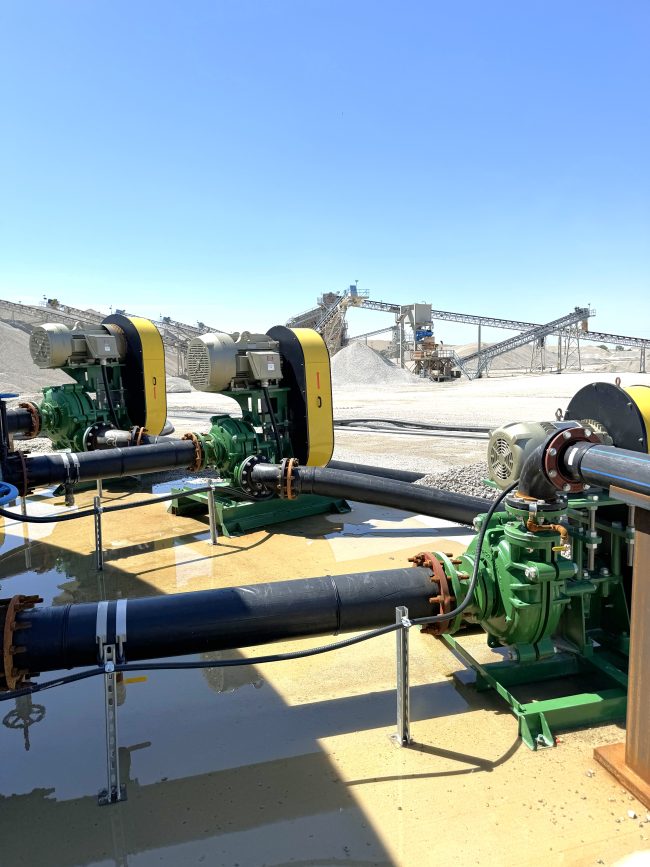
Equally important is the role of knowledge. Even the most robust equipment will underperform if it is incorrectly applied or poorly operated. Many failures attributed to mechanical limitations can be traced back to installation errors, misalignment, or operation outside intended parameters. Training and knowledge transfer are therefore not secondary considerations—they are central to performance. When operators understand how a system behaves, they are better equipped to maintain stability, extend wear life, and reduce the likelihood of failure.
This intersection between engineering and operational understanding is reshaping the role of equipment providers. Increasingly, the expectation is not simply to supply pumps, but to contribute to the performance of the system as a whole. This involves ongoing engagement, performance monitoring, and a willingness to work alongside operators to refine and improve outcomes over time.
In this context, the distinction between supplier and partner becomes significant. Where once the relationship ended at installation, it now extends into the operational life of the system. Performance is no longer a static outcome, but a continuous process of evaluation and improvement.
As mining operations across Africa continue to evolve, so too must the approach to slurry systems. The complexity of these environments leaves little room for assumption. Systems must be understood in context, validated in practice, and managed with a balance of engineering precision and operational insight.
The future of slurry performance will not be defined by better catalogues or more detailed curves. It will be defined in the field, where theory meets reality and where performance is measured not by expectation, but by output.
Ultimately, success in slurry systems is not determined by the equipment installed. It is determined by what that equipment enables.