
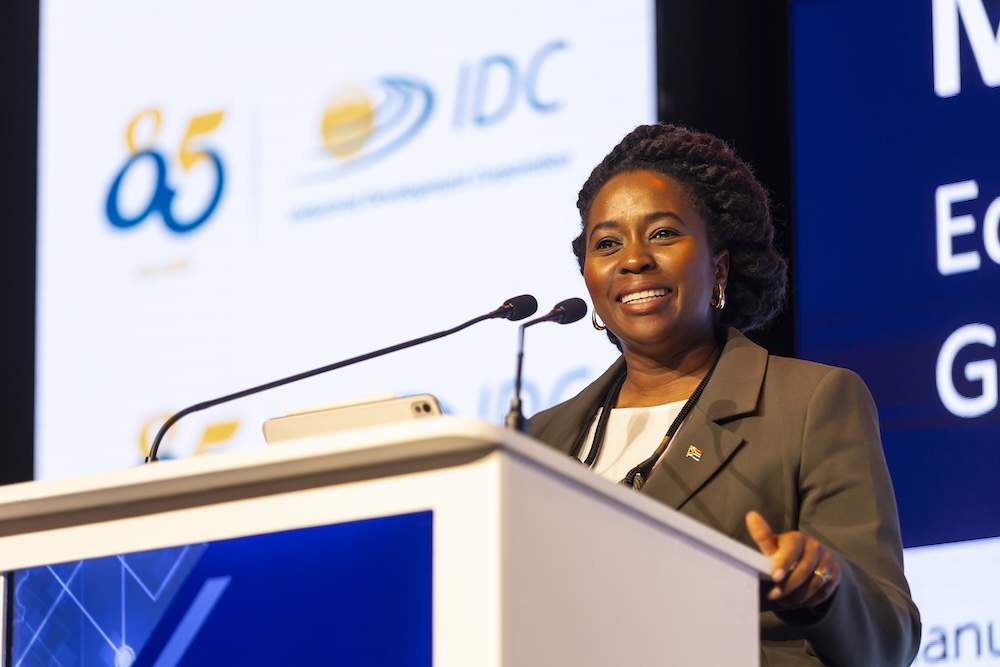
At the Manufacturing Indaba, Gauteng MEC Vuyiswa Ramakgopa says Africa must move beyond exporting raw materials by building competitive automotive value chains underpinned by world-class logistics and infrastructure
Gauteng MEC for Economic Development, Agriculture and Rural Development, Vuyiswa Ramakgopa, recently delivered a keynote address at the 13th annual Manufacturing Indaba, highlighting the critical role of the automotive industry in driving Africa’s industrialisation. Speaking under the topic, Manufacturing the Future: New Market Economics and Africa’s Industrial Growth, she said manufacturing success depends on long-term planning, policy certainty and integrated logistics ecosystems.
Ramakgopa opened her address by reflecting on a recent visit to Morocco, where she attended the United Cities and Local Governments Africa Congress. Although manufacturing was not the focus of the trip, she said the country’s economic confidence and industrial progress left a lasting impression.
Morocco has transformed itself into one of Africa’s leading manufacturing economies over the past two decades, becoming the continent’s largest exporter of passenger vehicles and producing more than 700,000 vehicles annually through manufacturers including Renault and Stellantis. Its automotive industry now contributes around 22% of the country’s exports while creating thousands of jobs across manufacturing, logistics and supplier networks.
However, Ramakgopa stressed that South Africa should not seek to replicate Morocco, but rather learn from its deliberate industrial strategy.
“The lesson here is not that we didn’t become Morocco. The lesson is that industrial success does not happen by accident. It happens when a country makes deliberate decisions about where it wants to compete, how it wants to compete, and in what industries it wants to lead in. These decisions must align with public policy, private investment and be sustained over time,” she said.
She argued that Africa’s future prosperity will depend on its ability to convert its vast natural resources into finished products instead of continuing to rely on exporting raw materials.
“What transforms an economy is the ability to transform potential into productive capacity,” she said, adding that manufacturing creates far more than products.
“Manufacturing does more than just produce goods. It creates skilled employment, stimulates research and innovation, strengthens domestic supply chains and gives small businesses an opportunity to participate in larger industrial ecosystems. That is where lasting prosperity is created.”

According to Ramakgop, the African Continental Free Trade Area (AfCFTA) presents an unprecedented opportunity to build an integrated continental manufacturing economy.
With Africa expected to account for one in every four people globally by 2050 and the AfCFTA creating a market of more than 1.4 billion people with a combined GDP exceeding US$3 trillion, she said the continent’s success should be measured not by the volume of goods crossing borders, but by how many of those goods are designed, manufactured and exported by African businesses.
For Gauteng, this responsibility is especially significant given the province’s role as South Africa’s economic engine.
Occupying less than 2% of the country’s land area while contributing more than a third of national economic output, Gauteng remains home to leading manufacturers, research institutions and the logistics networks connecting South Africa to regional and international markets.
She noted that maintaining this position requires continued investment in infrastructure, institutional stability and policy consistency.
“Investors do not make decisions based on incentives alone. They invest where they have confidence in strong institutions, reliable infrastructure and consistent policy. They invest where government understands the practical realities of doing business and is committed to creating an environment where enterprise can flourish.”
Ramakgopa emphasised that logistics infrastructure is central to industrial competitiveness, arguing that manufacturing growth cannot occur without efficient transport networks, energy security and modern industrial precincts.
She said Gauteng has deliberately invested in strengthening its industrial ecosystem to improve production capacity, expand market access and position the province as a gateway to regional and continental trade.
One of the province’s flagship initiatives is the Tshwane Automotive Special Economic Zone, developed around Ford Motor Company’s Silverton manufacturing plant.
Rather than viewing the project as a standalone investment, she described it as an integrated automotive ecosystem where vehicle assembly, component manufacturing, supplier development, logistics and technical skills development reinforce one another.
“The success of the automotive sector reminds us that competitiveness is not built factory by factory. It is built ecosystem by ecosystem. Projects like the Tshwane Automotive Special Economic Zone demonstrate how strategic investment, supplier development, logistics and skills can come together to create globally competitive manufacturing.”
She also highlighted the continued success of BMW Group’s Rosslyn plant, South Africa’s first automotive manufacturing facility and now one of BMW’s globally integrated production hubs, exporting vehicles assembled in Gauteng to international markets.
Ramakgopa added that South Africa cannot afford complacency as global supply chains continue to evolve.
Instead, she called for stronger partnerships between government, business, universities and entrepreneurs to ensure South African manufacturing remains globally competitive and capable of leading Africa’s industrial future.