
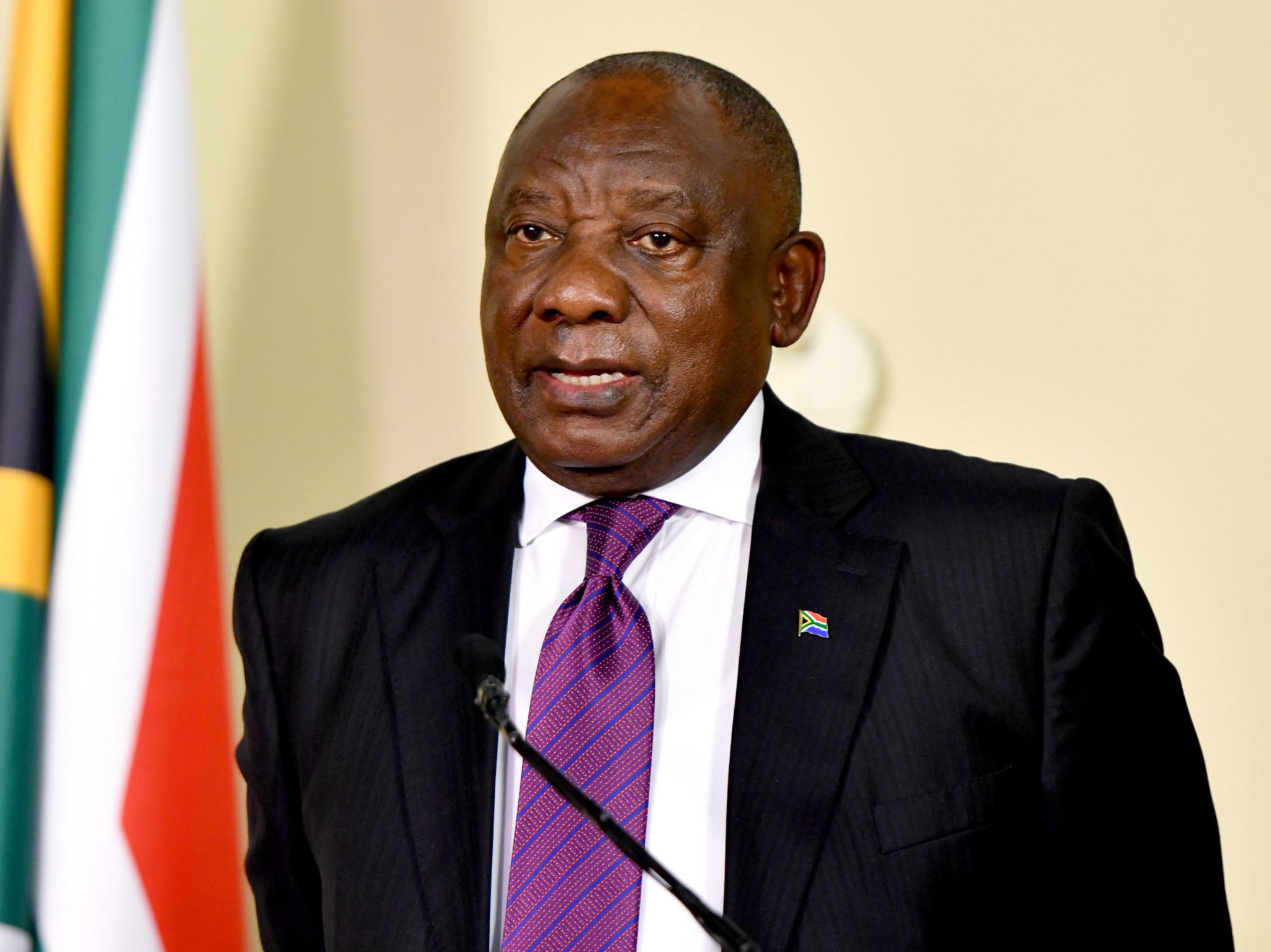
President says stronger rail, ports and manufacturing partnerships will boost exports, investment and competitiveness
President Cyril Ramaphosa has reaffirmed the critical role of logistics infrastructure in South Africa’s industrial growth, saying improvements to rail and port performance will be essential to attracting investment, strengthening exports and supporting the country’s manufacturing sector.
Speaking at the official line-off of Toyota South Africa’s ninth-generation Hilux at the company’s Prospecton plant in KwaZulu-Natal, Ramaphosa said efficient freight networks are central to South Africa’s ambitions of becoming a globally competitive manufacturing hub.
“Reliable ports, efficient railways and modern infrastructure are not simply transport assets. They are economic infrastructure that determines our global competitiveness,” he said.
The President welcomed recent improvements in freight logistics, noting that Transnet’s vehicle terminals in Durban, Gqeberha and East London handled more than 792,000 fully built vehicles in the ten months to February 2026, their highest productivity levels in recent years. He said deeper public-private partnerships in rail and ports would help strengthen South Africa’s position as an export platform.
Ramaphosa’s remarks came as Toyota South Africa celebrated the launch of the ninth-generation Hilux following a R10.4 billion investment in the programme. Around one-third of the investment was directed towards expanding local supplier capacity and tooling, while component suppliers invested a further R2 billion to support localisation.
He described the investment as a vote of confidence in South Africa’s manufacturing sector and highlighted the broader economic impact of automotive production through job creation, supplier development and exports.
The President said the automotive industry contributes about 5% to South Africa’s GDP, supports more than 115,000 direct manufacturing jobs and more than half a million jobs across the wider value chain.
Looking ahead, Ramaphosa said South Africa is well positioned to capitalise on the global transition to cleaner mobility, particularly through its endowment of critical minerals used in next-generation vehicle technologies.
“If we combine these natural resources with advanced manufacturing, local beneficiation, technological innovation and world-class automotive production, South Africa can become a leading global hub for future mobility,” he said.
He added that government would continue supporting component manufacturing, battery value-chain development, research and innovation, while providing the policy certainty needed to encourage long-term investment in the sector.