
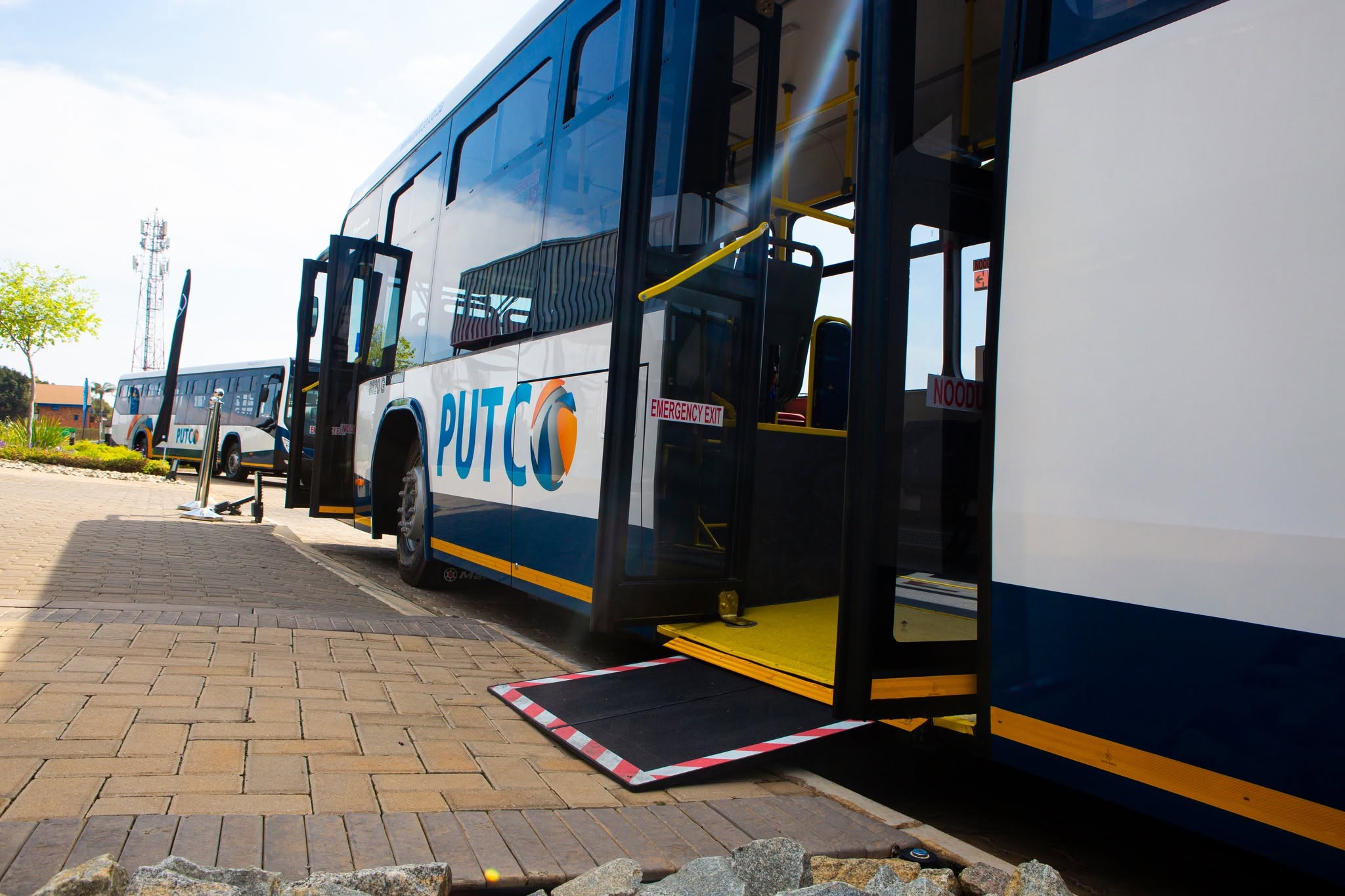
The new low-floor buses feature wheelchair-accessible areas, priority seating, grip handles and visual guidance as Putco seeks to make commuter transport more inclusive
Access to public transport remains a challenge for many people living with disabilities, particularly wheelchair users and passengers who rely on crutches.
To address some of these challenges, South African public transport operator Putco is introducing new inclusive buses designed to make boarding, travelling and moving around the vehicle easier for passengers with disabilities.
The buses feature a low-floor design, allowing passengers to board with less difficulty. They are also fitted with grip handles at the entrance and throughout the passenger area, while yellow reflective paving provides visual guidance to passengers as they move into the bus.
Harry Makitla, Larimar Technical Executive, said the new buses were designed with accessibility in mind while retaining the requirements needed for daily commuter operations.
“This bus is built on a Mercedes-Benz chassis that is running on a Euro 5 engine, and it’s built on the Torino G7 Marcopolo body. This bus is different from the other buses, the floor is low, allowing easy access into the bus.
“You will see with the fit-out doors, the grip handles that allow you to grab in here to board the bus and come into the passage. You will see as well that the bus has some yellow reflective paving, giving you the guidance where you should walk,” said Makitla.
Passenger seating has also been considered in the design. The buses include priority seats with additional legroom, while grip handles have been installed for passengers who travel standing.
A dedicated preferential area has also been introduced to accommodate wheelchair users, giving passengers who use wheelchairs a designated space within the bus rather than requiring them to transfer to a standard seat.
The buses are also equipped with destination boards, allowing passengers to identify upcoming stops and follow their journey more easily.
Inclusive vehicles are important because they can help remove some of the physical barriers that prevent people with disabilities from using public transport independently. Features such as low floors, appropriate handholds, designated wheelchair spaces and clearer passenger information can make the difference between a service being technically available and one that is genuinely usable.