
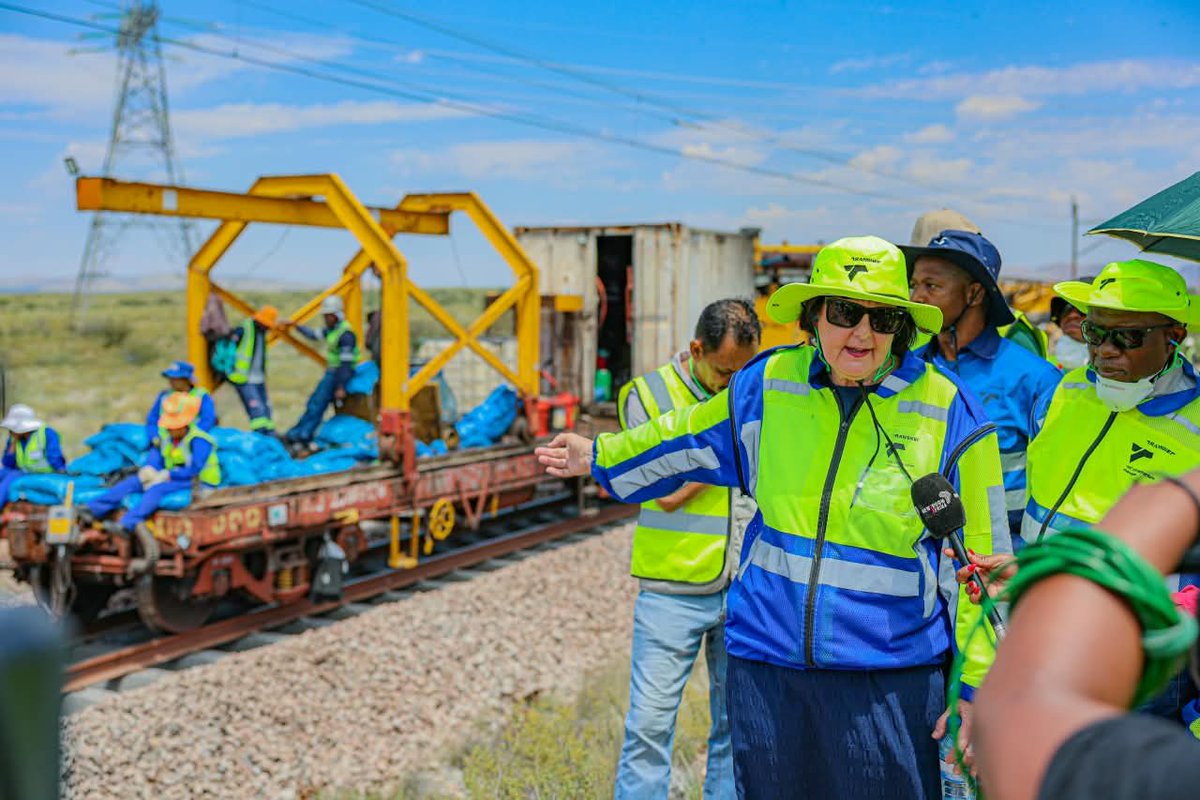
Transnet’s restoration programme aims to improve rail reliability and capacity on the 861 km corridor linking Sishen to the Port of Saldanha, supporting mineral exports and supply chain efficiency
The South African government is investing approximately R8.9 billion in restoring the 861 km Iron Ore Export Line, a critical freight corridor connecting the Sishen mining area in the Northern Cape to the Port of Saldanha in the Western Cape.
The long-term Ore Line Restoration Programme, led by Transnet Rail Infrastructure Manager (TRIM) and running until 2030, is intended to improve rail reliability, increase capacity and support economic growth by strengthening the country’s freight infrastructure.
Transport Minister Barbara Creecy outlined the investment during a site visit to the Iron Ore Line, as part of the annual maintenance shutdown.
“The TRIM long-term Ore Line Restoration Programme, which runs until 2030, is valued at approximately R8.9 billion and is aimed at restoring reliability, improving capacity and supporting economic growth through a safe, efficient and reliable rail network,” Creecy said.
The corridor is a strategic export route for South Africa’s iron ore industry, linking mining operations to international markets through the Port of Saldanha. Its performance has direct implications for freight volumes, port operations and the competitiveness of the country’s mineral exports.
Creecy emphasised that the railway’s importance extends beyond the movement of commodities, with implications for employment and businesses throughout the logistics value chain.
“This corridor is therefore far more than a railway line. It is an economic artery that supports exports, industrial growth and employment across our economy.
“When this corridor performs well, mines can move their commodities efficiently, exporters can reach international markets, ports can operate more effectively and businesses across the logistics value chain can grow. It also strengthens South Africa’s position as a reliable trading partner,” she said.
The annual maintenance shutdown, which runs from 6 to 16 October, provides TRIM with a dedicated window to undertake intensive infrastructure work that would be difficult to complete while normal rail operations continue.
The maintenance programme includes replacing rails and sleepers, screening ballast, maintaining and replacing turnouts, accelerating track maintenance, rehabilitating track formations and installing culverts. Electrical and signalling systems are also undergoing maintenance.
These interventions are intended to improve track condition, strengthen infrastructure integrity and support safer, more reliable train operations along the export route.
“These may sound like highly technical activities, but ultimately they have a simple purpose: to build a safer, more reliable and more efficient railway,” Creecy said.
She added that safety remains central to the maintenance programme and the restoration of the corridor.
“Safety is not separate from delivery. It is the foundation of delivery. The success of this shutdown will be measured not only by the maintenance completed, but by ensuring that every person returns home safely and that the corridor is restored to service without compromise,” the Minister said.