
As global automakers face mounting competition and shifting supply chains, Africa’s push to localise production is becoming increasingly urgent
BMW’s decision to cut thousands of jobs in Germany is more than another sign of pressure on a global carmaker. It is a reminder of just how quickly the manufacturing landscape is changing – and why Africa cannot afford to be left behind.
The German premium automaker announced this week that it will reduce its workforce in Germany by several thousand positions by the end of 2027 through a voluntary redundancy programme. Reports indicate that the cuts could affect around 8,000 employees, mainly in administrative and development functions rather than factory production.
The move comes as BMW faces a difficult global market, particularly in China, where its vehicle sales fell by 30% in the second quarter. The company is facing growing competition from Chinese manufacturers, alongside wider changes in technology, regulation and global trade.
For Africa, this should be a lesson about the importance of building manufacturing systems that can adapt as global markets change.
Africa cannot afford to sit on the sidelines
The continent has long been positioned as a source of raw materials, while much of the processing and manufacturing takes place elsewhere.
That model is increasingly difficult to defend as African countries look for ways to create jobs, increase industrial capacity and capture more value from their own resources.
This was highlighted at this year’s Manufacturing Indaba in Johannesburg, held under the theme “Made in Africa: Scaling Growth, Shaping Trade”. The event brought together government, manufacturers, investors and other industry stakeholders to discuss how the continent can strengthen its industrial base, increase localisation and become more competitive in global markets.
To position Africa as global competitors, South Africa is already taking steps in this direction.
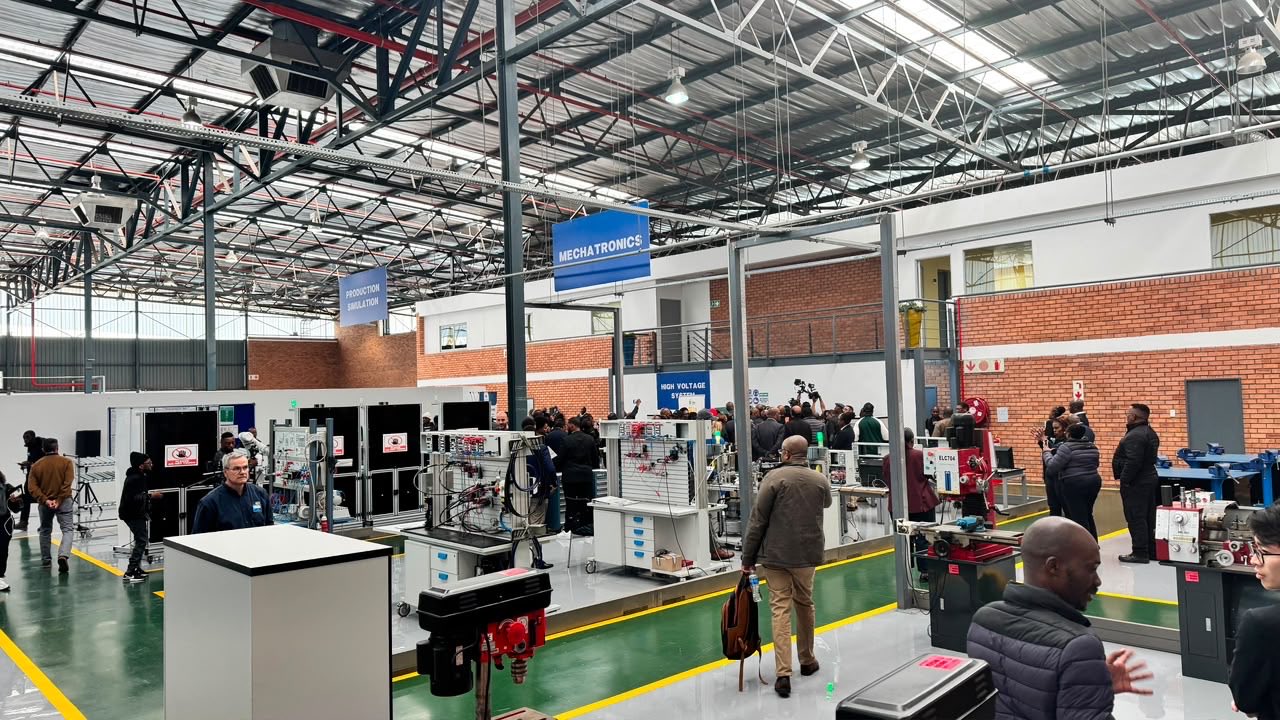
In Gauteng, the provincial government recently relaunched the former Gauteng Automotive Learning Centre in Rosslyn as the Manufacturing Centre of Excellence. The facility is designed to prepare young people for advanced manufacturing, automation, robotics, mechatronics, lean manufacturing and new energy vehicle technologies.
The reopening of this manufacturing hub goes beyond training.
A competitive manufacturing industry needs the people, technology, suppliers, infrastructure and logistics systems to support production from beginning to end.
This is particularly important for the automotive industry, where manufacturers rely on complex networks of component suppliers, transport operators, warehouses, ports and other service providers.
That is why the manufacturing and logistics conversation cannot be separated.
Manufacturing needs logistics
A factory cannot operate efficiently if its components arrive late, its transport costs are too high or finished products cannot reach export markets competitively.
The same applies to the wider African manufacturing ambition.
If the continent is serious about producing more vehicles, machinery, components and other value-added goods locally, it must also develop the logistics infrastructure and supply chains needed to move those products efficiently across borders.
This becomes even more important as African countries seek to benefit from the African Continental Free Trade Area (AfCFTA).
The opportunity is not only to manufacture for individual domestic markets, but to develop regional supply chains in which components can be produced in one country, assembled in another and distributed across the continent.
For the automotive sector, this could mean developing stronger networks of African component manufacturers around vehicle assembly plants, supported by efficient road, rail, port and warehousing infrastructure.
The EV transition raises the stakes
The automotive industry is also undergoing a major technological shift.
Electric vehicles, automation, digital manufacturing and new production technologies are changing what manufacturers need from their workforce and suppliers.
Gauteng’s Manufacturing Centre of Excellence is responding directly to this shift by focusing on Industry 4.0 skills and new energy vehicle technologies. The facility is intended to help ensure that the province’s automotive workforce remains competitive as global production changes.
But skills alone will not be enough.
Africa will need manufacturers capable of meeting international quality standards, suppliers able to deliver consistently, reliable energy and transport infrastructure, and logistics networks that can support increasingly sophisticated production systems.
The continent will also need to become better at producing the components and technologies that underpin the industries it wants to attract.
Turning the opportunity into production
BMW’s restructuring is a reminder that even established manufacturing economies are having to adapt to a rapidly changing industry.
For Africa, this should strengthen rather than weaken the case for industrialisation.
The goal should not simply be to attract a global manufacturer to establish an assembly plant and then import most of its components.
The bigger opportunity lies in building an ecosystem around manufacturing – one that includes local suppliers, skilled workers, technology providers, logistics companies and research institutions.
That would allow more of the economic value generated by manufacturing to remain on the continent.