
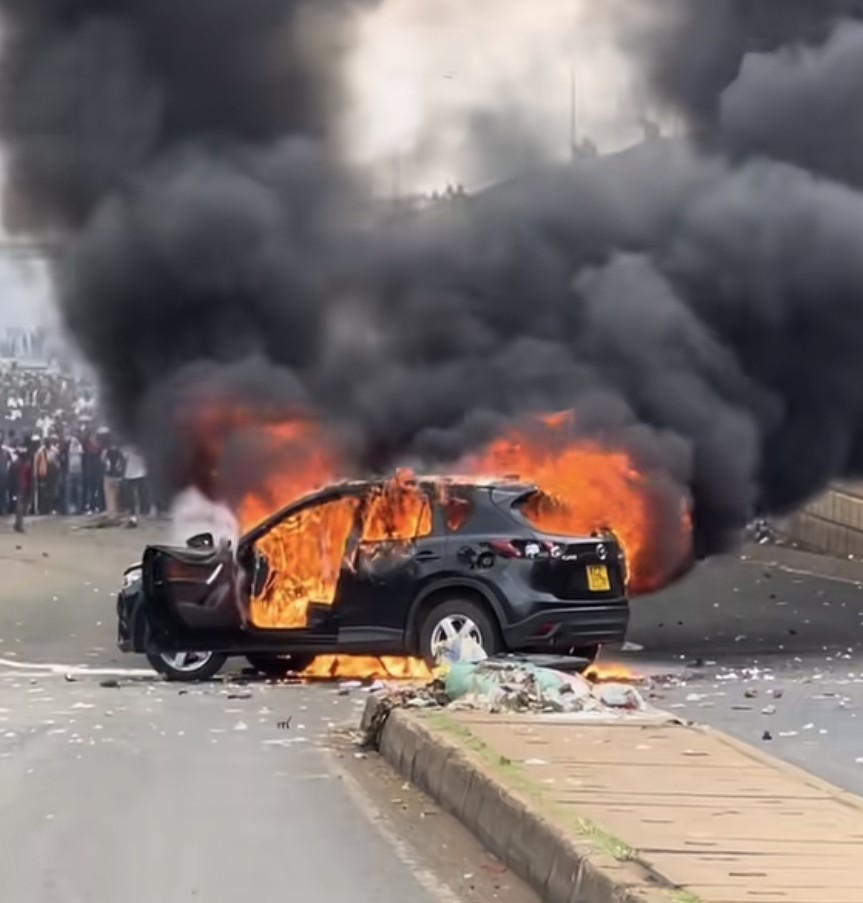
Local transporters in Kenya have taken to the streets, rejecting the fuel increase announced by the government
Violence has erupted in Kenya as citizens take to the streets to protest against the fuel price hikes that have sent shockwaves through the nation. The unrest began on Monday, May 18, when matatu (a minibus used to transport people) operators, the country’s most popular form of public transport, expressed their outrage following a staggering 20 percent increase in petrol prices and an almost 50 percent surge in diesel costs. As frustration mounted, the protests rapidly escalated into a violent confrontation between demonstrators and law enforcement.
According to Transport Cabinet Secretary Kipchumba Murkomen, the unrest has resulted in at least four fatalities, while over 30 individuals have sustained injuries since the inception of the strike. Many of those affected are said to be innocent bystanders caught in the crossfire, raising urgent concerns about public safety as tensions continue to flare.
The rising fuel prices in Kenya are largely attributed to ongoing conflicts in the Middle East, which have disrupted supply chains and driven up costs globally. To mitigate the impact of these shortages, the Kenyan government was compelled to suspend fuel quality standards, a decision that has faced backlash from both consumers and transport operators alike.
While Kenyans are taking to the streets in protest, their neighbouring counterparts in South Africa are navigating a similarly dire economic environment without similar demonstrations. Despite experiencing steep fuel price increases, South African citizens appear to be accepting their predicament with a sense of resignation, quietly enduring the rising costs without resorting to public outcry.