
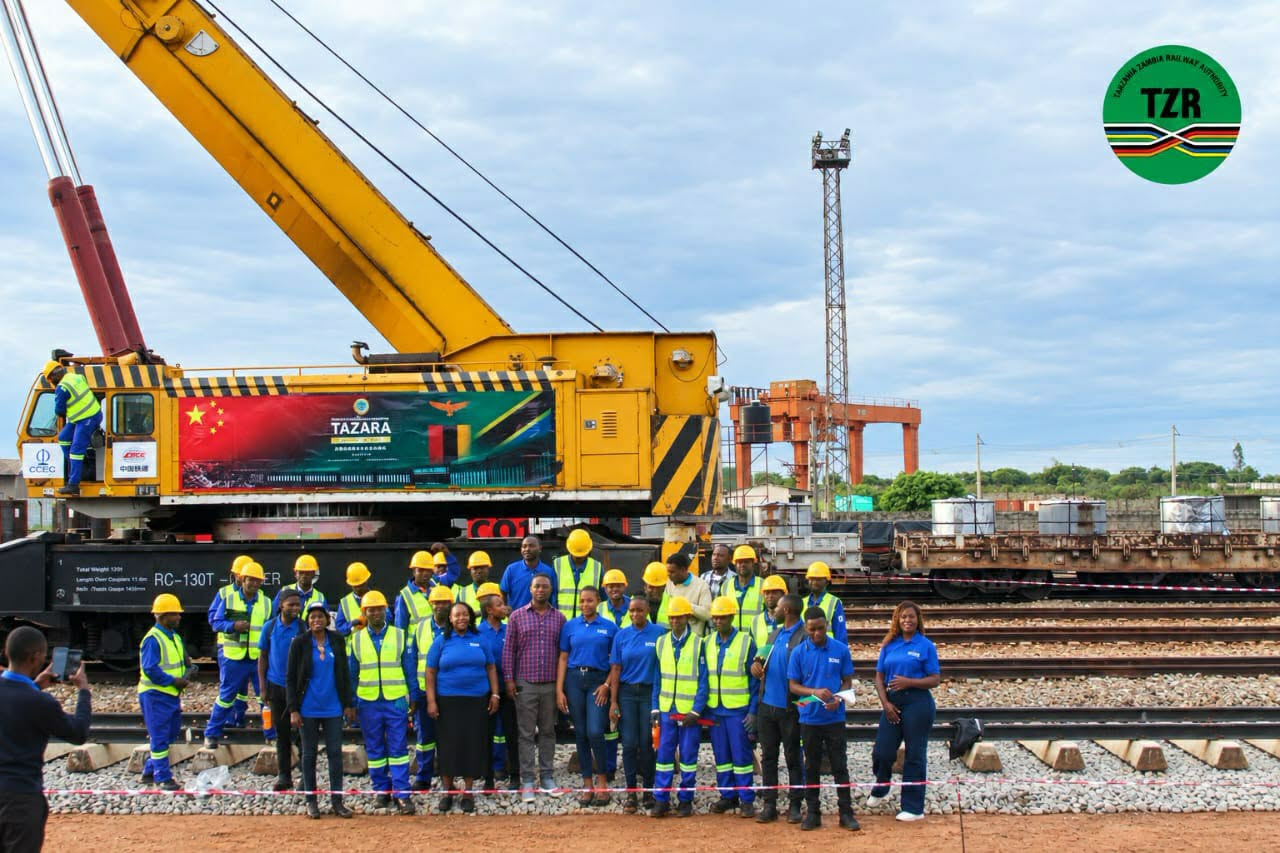
Tanzania and Zambia are investing in the rehabilitation of the TAZARA rail network as they seek to increase freight capacity, improve regional connectivity and strengthen an alternative trade route to the Indian Ocean
One of the biggest conversations around African development is the need for improved infrastructure, particularly rail freight. While road transport remains an important part of the continent’s logistics networks, rising fuel costs, congestion, border delays and growing demand for long-distance freight are increasing the pressure on countries to strengthen their rail networks.
Working towards improving rail freight, Tanzania and Zambia are already reviving one of the region’s most important railway links.
The two neighbouring countries have announced that the revitalisation of the Tanzania-Zambia Railway Authority (TAZARA) has entered a new and visible phase following the official launch of construction works for a new TAZARA Training Centre and a modern Operations Control Centre in Dar es Salaam.
The facilities form part of a broader revitalisation programme aimed at rebuilding the railway’s infrastructure and improving its ability to move passengers and freight between Tanzania and Zambia.
Speaking about the project, Prof. Godius Kahyarara, Permanent Secretary in Tanzania’s Ministry of Transport, said its success would ultimately be measured by tangible improvements in the railway’s performance.
“The success of this project will ultimately be measured through visible improvements in railway performance, including safer operations, reliable passenger services, increased freight capacity, shorter transit times, better utilisation of railway assets, improved customer service and stronger financial sustainability.”
The wider TAZARA revitalisation programme is backed by an investment of more than US$1.4 billion under a 30-year concession with China Civil Engineering Construction Corporation (CCECC). The programme includes approximately US$1 billion for rehabilitation of the railway infrastructure, while around US$400 million is allocated for 32 new locomotives and 762 wagons.
For the regional logistics industry, this investment extends beyond repairing an ageing railway.
TAZARA provides Zambia, a landlocked country, with a direct rail connection to the Port of Dar es Salaam on the Indian Ocean. Strengthening that connection could provide greater freight capacity for Zambia’s mining industry while giving exporters and importers another route to international markets.
This is particularly important as African countries increasingly seek to avoid dependence on a single transport corridor. Zambia is simultaneously connected to several major regional trade routes, including the Lobito Corridor to Angola and the Atlantic, while the TAZARA route provides an eastern connection through Tanzania.
A stronger TAZARA therefore has the potential to contribute to greater corridor choice and resilience in Southern and East African logistics.
This also has some great contributions to the mining industry. Zambia is one of Africa’s major copper producers, and moving large volumes of minerals over long distances is heavily dependent on reliable transport infrastructure. Rail can provide an important alternative for bulk cargo, particularly when road networks are under pressure.
The investment also comes at a time when African countries are increasingly looking at railways not simply as passenger transport systems, but as strategic infrastructure supporting trade, industrialisation and regional integration.
The new Operations Control Centre is expected to support more efficient management of railway operations, while the Training Centre will contribute to developing the skills needed to operate and maintain a modernised network.